 Crete Island Guide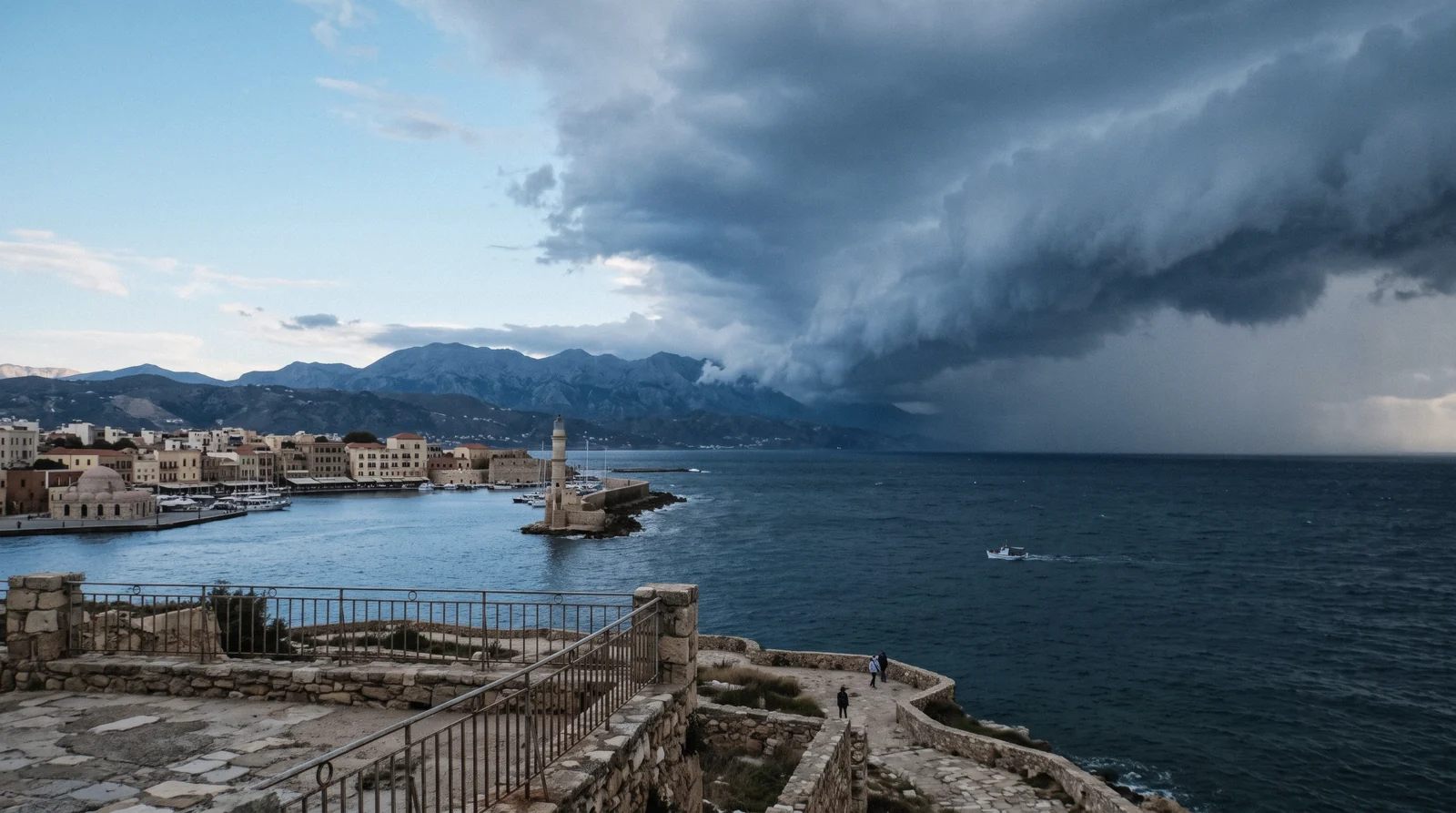
Crete weather splits into two climates on one island: Heraklion on the drier north-central coast and Chania on the wetter, more exposed west. The figures below are 30-year averages computed directly from the Open-Meteo ERA5 archive for both cities, covering every day from 1 January 1995 to 31 December 2024, so they describe the climate rather than any single forecast. This page owns the numbers, by month and by city; the decision of when to actually book a trip, including the Samaria Gorge season and which months the beaches get crowded, lives on best time to visit Crete. The rest of the island, from the beaches these numbers affect to the ferry schedules storms disrupt, is on the Crete, Greece travel guide.
Quick answer Hot, dry summers, mild wet winters, west coast wetter than east
Crete runs a classic Mediterranean pattern: hot, almost rainless summers and mild, wet winters, but the west coast gets noticeably more rain than the east. Heraklion's July average high is 31.4°C (89°F) with just 2.7 mm of rain; Chania's January brings 136.4 mm, more than double Heraklion's 67.7 mm the same month. No sea-temperature series is published in the climate archive this page draws on, so swimming-season dates are a judgment call, covered on the best time to visit page.
Key takeaways
- Summer (June-August) is dry almost everywhere on the island, Heraklion's July rain averages just 2.7 mm across the whole month, the storms and wind section covers the exception.
- Autumn and winter rain concentrates on the west: Chania's December average of 149.1 mm is more than double Heraklion's 64.5 mm, which matters for anyone planning the Samaria Gorge hike at the edges of its season.
- Heat closures are real in July and August: Knossos and other Ministry sites can shut at midday on alert days, covered under heat and site hours.
- For which months actually suit a trip, not just what the thermometer says, see best time to visit Crete.
Crete month by month (Heraklion)
Average daily high temperature by month in Celsius, with the Fahrenheit reading underneath, computed from the Open-Meteo ERA5 reanalysis for Heraklion (35.33°N, 25.20°E) over the 30 years from 1995 to 2024. Chania runs a few degrees cooler in summer and wetter in winter; the full comparison is in the table below.
July is Heraklion's hottest month on the 30-year mean at 31.4°C (89°F) and its driest at 2.7 mm. January and February sit lowest at 14.9°C and 15.6°C, with the most rain at 67.7 mm and 68.2 mm. No sea-surface temperature series was available in the ERA5 archive used for this page, which covers 2-metre air temperature and precipitation only.
Crete weather by month: Heraklion vs Chania
Thirty-year averages from the Open-Meteo ERA5 archive, 1 January 1995 to 31 December 2024, for Heraklion (35.33°N, 25.20°E, north-central coast) and Chania (35.54°N, 24.15°E, west coast): the mean of daily maximum and minimum 2-metre air temperature for each calendar month.
| Month | Heraklion high / low | Chania high / low |
|---|---|---|
| January | 14.9°C / 8.8°C (59°F / 48°F) | 13.7°C / 10.0°C (57°F / 50°F) |
| February | 15.6°C / 8.7°C (60°F / 48°F) | 14.0°C / 10.0°C (57°F / 50°F) |
| March | 17.5°C / 9.7°C (64°F / 49°F) | 15.4°C / 11.1°C (60°F / 52°F) |
| April | 21.1°C / 12.2°C (70°F / 54°F) | 18.0°C / 13.2°C (64°F / 56°F) |
| May | 25.6°C / 16.1°C (78°F / 61°F) | 21.8°C / 16.8°C (71°F / 62°F) |
| June | 29.5°C / 20.2°C (85°F / 68°F) | 26.0°C / 20.7°C (79°F / 69°F) |
| July | 31.4°C / 22.8°C (89°F / 73°F) | 28.4°C / 23.2°C (83°F / 74°F) |
| August | 31.2°C / 22.9°C (88°F / 73°F) | 28.4°C / 23.6°C (83°F / 74°F) |
| September | 28.7°C / 20.4°C (84°F / 69°F) | 25.8°C / 21.3°C (78°F / 70°F) |
| October | 24.2°C / 17.0°C (76°F / 63°F) | 22.0°C / 18.0°C (72°F / 64°F) |
| November | 20.3°C / 13.6°C (69°F / 56°F) | 18.7°C / 14.9°C (66°F / 59°F) |
| December | 16.5°C / 10.6°C (62°F / 51°F) | 15.4°C / 11.9°C (60°F / 53°F) |
Chania reads a touch cooler than Heraklion in daytime highs almost every month but a touch warmer overnight, since its nights hold more humidity off the sea. The gap is widest in May, where Heraklion's 25.6°C high runs nearly 4 degrees above Chania's 21.8°C. Figures current for Q4 2026.
Rain: why the west coast gets twice the east coast's winter total
Rainfall is where Heraklion and Chania stop looking like the same island. The table below is the 30-year mean monthly precipitation total for each city, same ERA5 archive and date range as the temperature figures above.
Crete sits long and narrow, east to west, with the White Mountains (Lefka Ori) and the Psiloritis massif running through the middle. Atlantic and Ionian weather systems hit the west coast first and the mountains wring most of the moisture out before it reaches the east, which is the plain mechanical reason Chania gets wetter winters than Heraklion while both cities share nearly identical dry summers.
| Month | Heraklion rain (mm) | Chania rain (mm) |
|---|---|---|
| January | 67.7 | 136.4 |
| February | 68.2 | 116.2 |
| March | 60.1 | 85.3 |
| April | 34.4 | 36.9 |
| May | 28.8 | 24.4 |
| June | 11.1 | 5.3 |
| July | 2.7 | 3.7 |
| August | 6.0 | 6.5 |
| September | 22.1 | 27.0 |
| October | 35.3 | 71.8 |
| November | 41.6 | 85.9 |
| December | 64.5 | 149.1 |
The crossover months
April through August the two cities are close, within a few millimetres most months and Chania is actually slightly drier than Heraklion in June. The split opens hard from October: Chania's 71.8 mm roughly doubles Heraklion's 35.3 mm, and by December Chania's 149.1 mm is more than double Heraklion's 64.5 mm. If a trip's purpose is hiking the Samaria Gorge, which starts from the western mountains and runs on a 1 May-15 October season, the wet shoulders of that window sit squarely inside Chania's rainier half of the year, not Heraklion's.
Open-Meteo Historical Weather API (archive-api.open-meteo.com), ERA5 reanalysis, daily data 1995-2024 for Heraklion (35.3251, 25.2046) and Chania (35.5360, 24.1463).
Storm season, flash floods and the wind
Crete's wet season is not gentle drizzle. Autumn and winter storms can drop a month's average rainfall in a single system, and the island's steep gorges and dry riverbeds turn that water into fast-moving floods with little warning.
Red-code alerts and what they close
When the Greek weather service issues a red-code severe-weather warning, the Natural Environment and Climate Change Agency (NECCA), which manages Samaria National Park, closes both gorge entrances, Xyloskalo in the north and Agia Roumeli in the south, with no advance reopening date given until conditions clear. This is not a rare edge case: it is the standard response to the storm systems that move across the Mediterranean from autumn into early spring, and it can happen inside the gorge's own 1 May-15 October operating season as well as outside it. Mainland ferry operators post the same kind of live banners warning of schedule changes for adverse weather on their own homepages during the same storm windows.
If a gorge hike or a ferry crossing is the anchor of a trip, build in a buffer day rather than a tight connection, and check the Samaria Gorge page and getting to Crete immediately before travel rather than weeks ahead.
Wind
No official wind-speed dataset for Crete was sourced for this page, so no average knot figure is printed here. What is well documented by the storm pattern above is that the west and north coasts, more exposed to open sea, see the boat trips to Balos, Gramvousa and Chrissi island cancelled on short notice in rough conditions more often than inland sites are affected; Balos boat trip and chrissi island both depend on operator sailing conditions, not a fixed schedule.
NECCA (necca.gov.gr) live Samaria status notice and the ANEK ferry operator's own homepage banner.
Heat and what it closes
Summer highs above 30°C are routine from late June into early September on both coasts, and the Ministry of Culture builds midday heat closures into the rules for its own archaeological sites rather than treating them as exceptions.
The clearest example is Knossos, whose summer hours run from 08:00, but the site has closed at midday for several hours on confirmed heat-alert days, reopening only once temperatures ease in the late afternoon. The same category of Ministry site, Phaistos, Gortyn and the Heraklion Archaeological Museum among them, follows the national hours-stepdown rule that shortens the day from 1 September, which is partly a response to the same heat pattern as the season cools. None of these sites has air conditioning in its outdoor areas, and there is no shade on most ancient-site walking routes.
- Book the first entry slot of the day, before 09:00, on any outdoor archaeological site from June through August
- Carry more water than feels necessary, the Ministry sites sell little or none inside the gate
- Treat a midday closure as a possibility, not an exception, and build a shaded or indoor option such as a museum into the same afternoon
- The Samaria Gorge gates themselves close by 16:00 daily regardless of heat, specifically so hikers are not caught on exposed rock faces after the hottest hours
Ministry of Culture hours (odysseus.culture.gr) and Samaria Gorge gate hours (samaria.gr).
Crete sea temperature: what is and is not published here
No sea-surface temperature series exists in the dataset this page draws on. The Open-Meteo ERA5 archive used for every figure above covers 2-metre air temperature and precipitation over land, not sea-surface readings, and this page prints only what it can verify rather than a plausible-sounding number pulled from memory. What can be said honestly from the air-temperature pattern: water around Crete tracks air temperature with a lag of roughly a month, so the warmest sea conditions follow the hottest air months rather than coinciding with them, and the coldest water follows the coldest air months the same way.
Anyone deciding specifically when the sea is warm enough to swim, rather than what the air temperature will be on land, should treat any single-number claim elsewhere online with caution unless it names a dated, citable source, and should instead use the month-by-month air data above as the closest verified proxy this page can offer.
What to pack, by month
Matched to the averages above rather than to a packing-list template.
December through February
Heraklion highs run 14.9-16.5°C (58-62°F) and Chania a notch cooler; both cities see their heaviest rain of the year, Chania especially. A waterproof shell earns its space more than a heavy coat does, since temperatures rarely drop near freezing at sea level but rain is frequent. Evenings are genuinely cold enough for a proper layer, particularly inland and at altitude on the Lasithi Plateau or near the White Mountains.
March through May
The transition months, Heraklion climbing from 17.5°C to 25.6°C, Chania from 15.4°C to 21.8°C, with rain tapering fast after March. Layers that come off by midday are the right call, and this is also the window when Samaria Gorge is not yet open (it starts 1 May), so a spring trip timed for the gorge needs to land in the back half of May at the earliest.
June through August
Both cities sit above 28°C on average with under 12 mm of rain a month. Light, breathable clothing, a hat and reef-safe sunscreen matter more than anything else packed. A light jumper for the evening is still worth it on a boat trip or a mountain village visit after dark.
September through November
Heraklion stays warm into September at 28.7°C before cooling to 20.3°C by November; Chania's rain climbs fast in this window, from 27.0 mm in September to 85.9 mm in November. A waterproof layer belongs in the bag again from October, and this is the tail of the Samaria Gorge season too, which closes 15 October in a normal year.
Weather-dependent days worth checking before you book
Each of these runs on an operator's own sailing or trail conditions rather than a fixed indoor schedule, so the weather above is the thing to check before you lock in a date. Prices are the listing's own from-prices in US dollars.
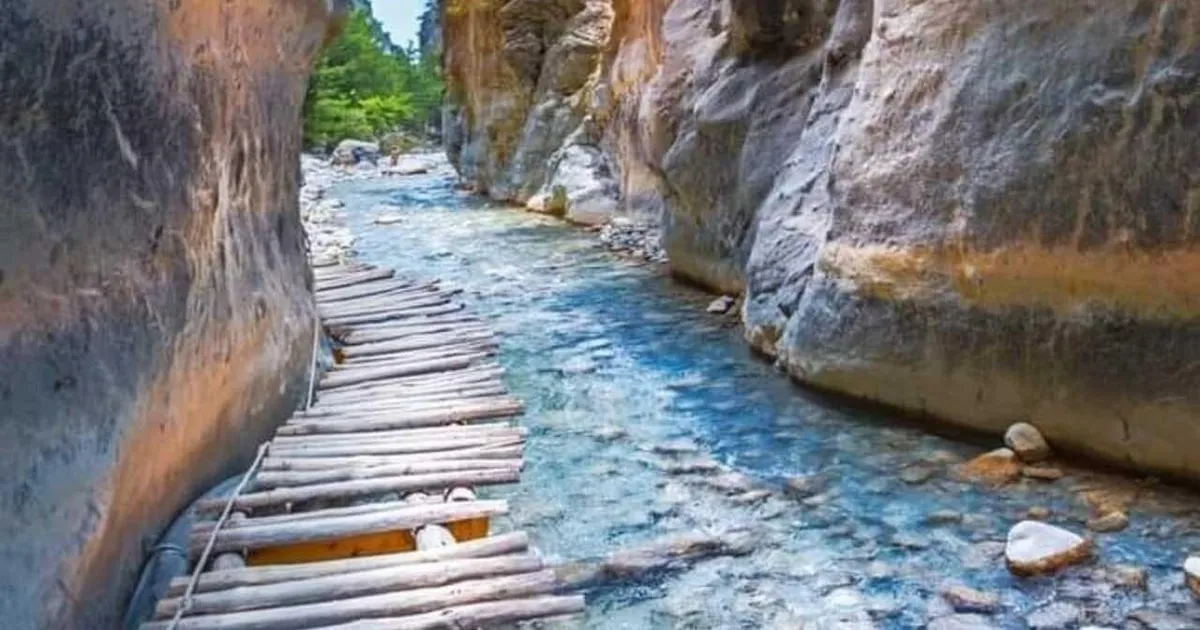 from $59.09
Samaria Gorge All-Inclusive (Ferry & Entry Fee)
Samaria Gorge with the park entry fee and the Agia Roumeli ferry already in the price, coach from the Chania area to Omalos and back from Sfakia.
Check Availability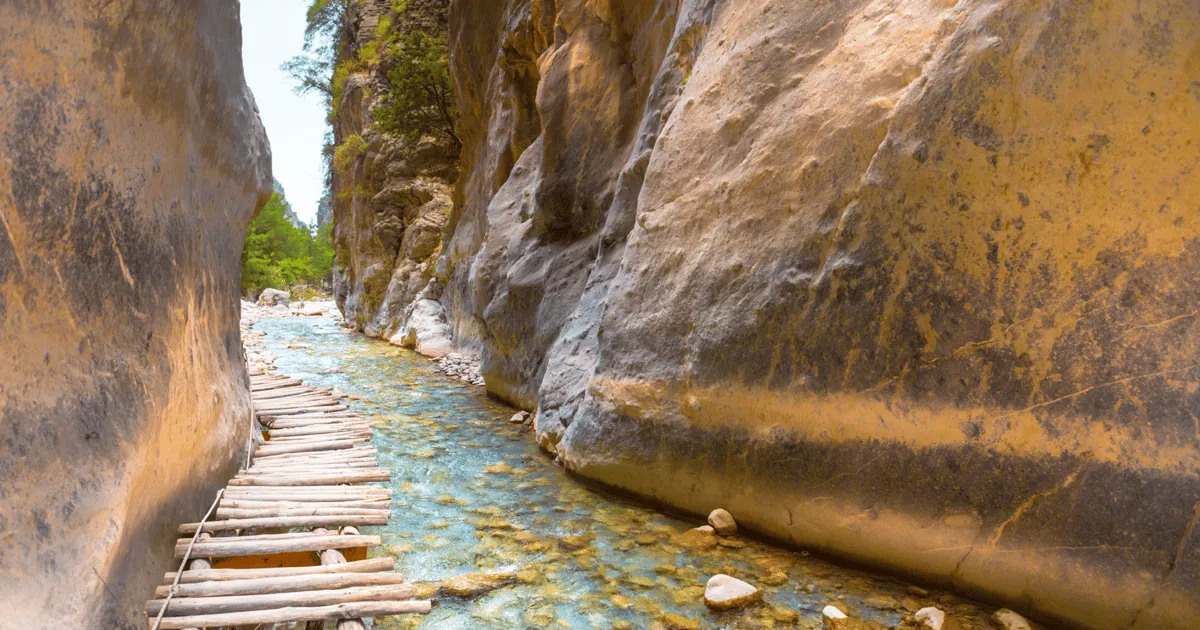 from $31.75
Samaria Gorge with Professional Hiking Guide
Samaria with a professional hiking guide walking the 16 km with the group, for hikers who want pacing and a guide at the Iron Gates.
Check Availability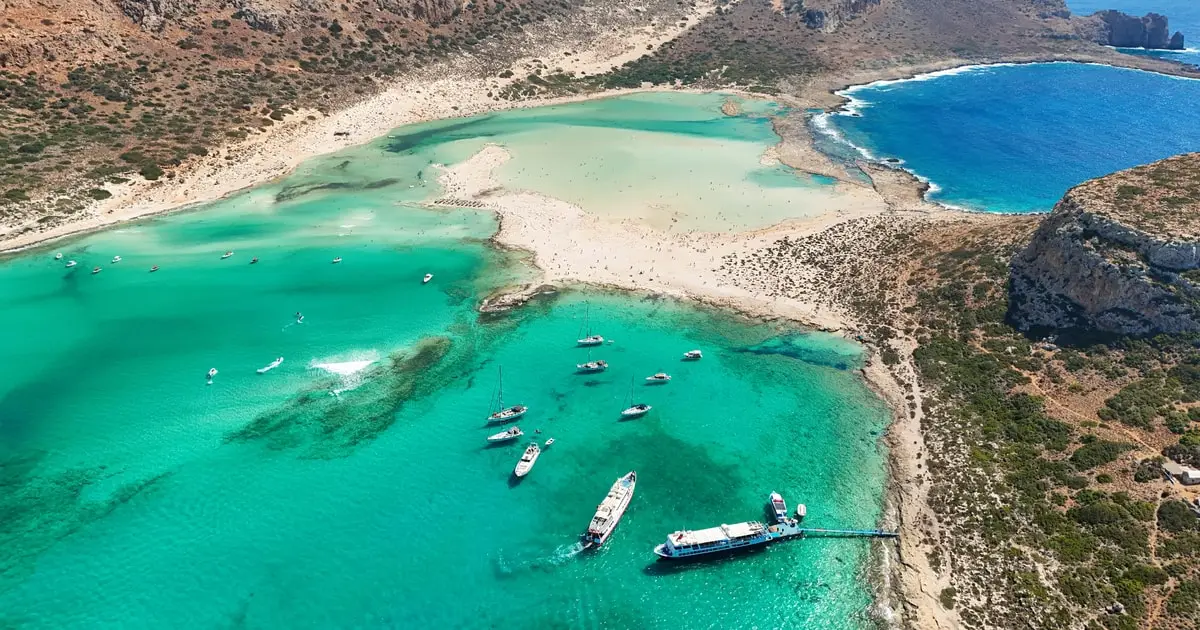 from $56.05
Chania/Rethymno: Balos & Gramvousa With Pickup & Boat Ticket
The classic Balos day: coach from the Chania or Rethymno side, the boat from Kissamos to Gramvousa and Balos with the ticket included.
Check Availability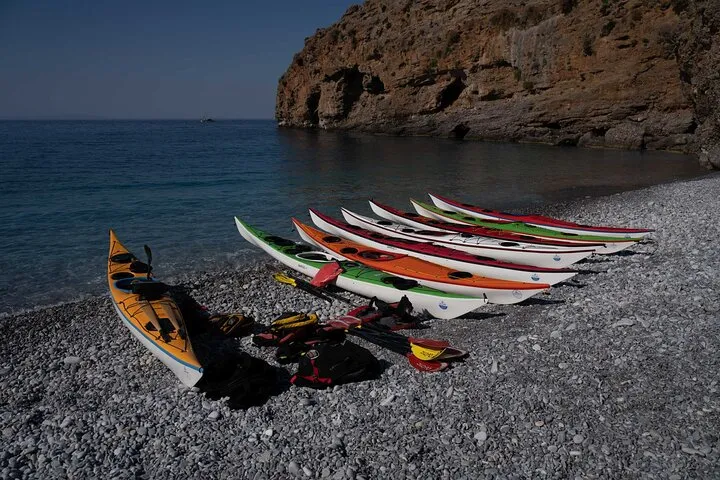 from $117.62
Sea Kayaking Sfakia, Crete
Sea kayaking on the Sfakia coast, the cliffs and coves around Loutro reached from the water.
Check Availability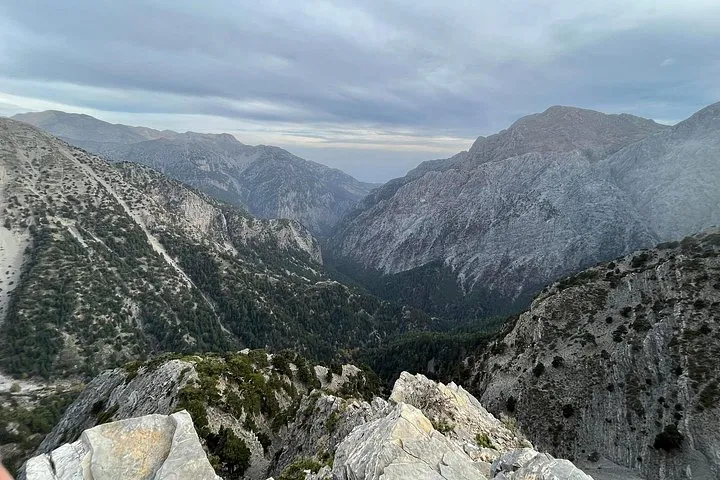 from $108.94
Explore the White Mountains of Crete
A guided day in the White Mountains, the high plateaus and shepherd huts above the Omalos side.
Check Availability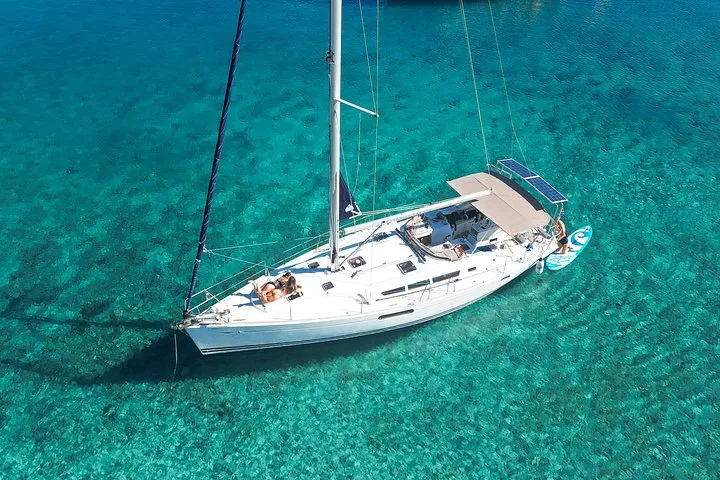 from $77.98
Dia Island Sailing Cruise with Meal and Water Activities
A sailing day from Heraklion to Dia island with a meal, swimming stops and snorkelling gear on board.
Check AvailabilityPrices, ratings and details are the platform's own. dollar figures are the listed prices — the platform bills in your account's currency.
Turn the climate numbers into a plan
Weather is one input. These pages turn it into a decision.
Best time to visit Crete
Crowds, the Samaria Gorge season, site hours and sea-day timing laid over the same climate data.
The decision page Check info & availabilityCrete costs
The climate resilience fee, transport fares and what a day actually costs by season.
Budget Check info & availabilityGetting around Crete
Bus schedules and routes that storms and heat both affect.
Transport Check info & availabilityCrete weather: questions
What is Crete's rainiest month?
Chania, on the west coast, averages 149.1 mm in December, its wettest month on the 30-year ERA5 mean. Heraklion's wettest month is February at 68.2 mm, less than half Chania's December total. See the full month-by-month table.
What is Crete's hottest month?
July, in both cities. Heraklion averages a 31.4°C (89°F) daily high and Chania 28.4°C (83°F), with August running a few tenths of a degree behind in each city. Both are also among the driest months, Heraklion at 2.7 mm and Chania at 3.7 mm.
What is the Crete sea temperature by month?
Not stated. No sea-surface temperature series was available in the air-temperature and precipitation archive this page draws on, and this page does not print an invented figure. The sea temperature section explains the gap and what can be inferred from the air-temperature pattern instead.
Is Crete warmer than Chania or Heraklion specifically?
Chania and Heraklion are both in Crete; they are two different coastal climates on the same island. Heraklion, on the drier north-central coast, runs slightly warmer by day most months, while Chania, more exposed to Atlantic and Ionian weather systems, is noticeably wetter from October through March. The comparison table has every month side by side.
Does it rain in Crete in summer?
Barely. Heraklion's June-August rain totals run 2.7 to 11.1 mm a month and Chania's 3.7 to 6.5 mm, the driest stretch of the year in both cities on the 30-year mean. What summer does bring is heat: see heat and what it closes.
When do storms close Samaria Gorge?
NECCA, the park's managing authority, closes both gorge gates on any red-code severe-weather alert, with no fixed reopening date until conditions clear. This can happen inside the gorge's normal 1 May-15 October season as well as outside it. Details and the live status link are on the Samaria Gorge page.
Crete Weather on Film
Three recent clips showing what an autumn-to-winter storm system on Crete actually looks like on the ground, and what a windy shoulder-season day on the north coast looks like by contrast.
Bad weather in Greece!! Storms in Crete, and unprecedented flooding and landslides
Footage of a storm system crossing Crete, the kind of event behind the red-code closures covered above.
Video: nue news tvSEVERE WEATHER in Crete! It is WORSE than expected!
A closer look at a severe storm day, useful context for why gorge and ferry schedules carry weather caveats.
Video: Kreta TVWindy October in Rethymno
An ordinary windy autumn day driving through a Crete coastal town, the more common shoulder-season reality.
Video: It's me Alex - Island MomentsVideos load from YouTube only when you press play.
We may earn a commission if you book through one of our links, at no extra cost to you. Full affiliate disclosure