 Crete Island Guide
Crete hotels are licensed into the same official star system used across Greece, and the one nightly figure any visitor can rely on without checking a booking platform is the climate resilience fee, not the room rate itself. This page of our Crete, Greece travel guide explains the category system, the fee by class, when demand actually peaks, and which base from where to stay suits which kind of trip. No official source publishes a nightly room rate for any Crete hotel, so none is invented here, and no property is named unless an official source lists it.
Quick answer Crete hotels in one minute
Crete hotels are licensed into star categories 1 through 5, plus a separate rooms and apartments tier for self-catering stays, the same national system used across Greece. The one verified nightly figure that applies everywhere is the climate resilience fee, charged per room from March to October: $1.68 (€1.50) at 1 and 2-star or a room and apartment let, $3.37 (€3) at 3-star, $7.86 (€7) at 4-star and $11.23 (€10) at 5-star. No official source publishes the actual room rate for any category or any specific hotel. Demand peaks in July and August across every base, and which area suits your trip matters more than the star rating, covered area by area on where to stay.
Key takeaways
- See the fee broken out by category in the table below before you budget a stay.
- First trip to the island? Where to stay in Crete compares all seven bookable areas on the ground, not by star rating.
- Travelling in July or August? Book earlier than the shoulder months; see the booking calendar below for why.
- Budgeting the whole trip rather than just the room? Crete costs builds out the rest of a daily spend.
The Official Hotel Category System
Every licensed hotel in Greece, including every one on Crete, sits in one of a small number of official categories, and the fee table later on this page is built directly from that system.
Star Categories 1 Through 5
Hotels are licensed into five star categories, 1 through 5, a classification that sets the baseline for facilities and service level a property must offer to hold that rating. The category is what the climate resilience fee is actually based on, which is also why that fee is the one figure on this page we can state with confidence rather than guess at from a booking platform's own snapshot.
Rooms and Apartments
Self-catering stays, licensed as rooms or apartments rather than as a hotel, sit in their own category for fee purposes and are charged at the same rate as a 1 or 2-star hotel. This tier covers everything from a single studio to a small family-run block, and it is where most of the island's budget and self-catering stock sits outside the resort towns.
What the Category Does Not Tell You
A star rating describes licensed facilities, not location, view or how recently a property was renovated. A 4-star hotel on the Hersonissos strip and a 4-star hotel on a quiet stretch of the Rethymno coast pay the same fee and carry the same category, and nothing about the number tells you which one is quieter at night. The area, covered on where to stay, decides that part.
What Each Level Usually Means in Practice
In general terms, and without claiming an official spec sheet for any single property, a 1 or 2-star listing on Crete is typically a small, simple hotel or guesthouse with basic rooms and little beyond that. A 3-star adds amenities such as a pool or a more complete breakfast. A 4-star usually means a larger property with more facilities, often closer to a beach or with grounds.
A 5-star is the island's resort tier, the category the large Hersonissos, Malia and Elounda properties mostly sit in. These are general patterns a traveller can expect, not a guarantee for any specific hotel, since no official source we checked publishes a facilities checklist by category.
The Climate Resilience Fee, Compared by Category
This is the one nightly hotel figure on Crete that comes from an official source rather than a booking platform's own listing. It is charged per room, not per guest, added at checkout on top of whatever rate you book.
The fee runs from March to October and scales with the hotel's official category.
| Category | Fee per room per night |
|---|---|
| 1 and 2-star hotels, rooms and apartments | $1.68 (€1.50) |
| 3-star hotels | $3.37 (€3) |
| 4-star hotels | $7.86 (€7) |
| 5-star hotels | $11.23 (€10) |
The low-season rate, November to February, is not published on an official page we could verify, so do not assume the fee drops to zero outside the March to October window without confirming at checkout. The fee is separate from the room rate itself, which no official source publishes for any property, category or area on the island.
Figures current for Q4 2026.
When to Book
Crete's booking calendar follows the same shape as its weather and its gorge seasons, and the two are connected.
Peak Season: July and August
Demand peaks across every category and every base in July and August, the same window the climate resilience fee charges its full rate without a published discount. Rooms in the resort towns and the Chania and Rethymno old towns book out earliest for this stretch, by the ordinary pattern of a Mediterranean island in its hottest, busiest months.
Shoulder Season: May, June, September, October
The Samaria Gorge season runs 1 May to 15 October, extending to 31 October in good conditions, which brackets the shoulder months closely. Booking inside this window still means the fee applies in full, but KTEL's own printed timetables shift validity dates within these months, for example one October schedule running only to the 24th and a different one from the 25th, so a bus or boat connection booked around a specific date needs reconfirming closer to travel.
Low Season: November to April
Outside the main season, several of the island's own attractions close or reduce service, which should factor into a hotel choice as much as the fee does. Spinalonga closes for winter from 1 November to 31 March, open only on request for groups, and the Samaria Gorge is shut outside its May-to-October window entirely. A base chosen for proximity to either sees little benefit from a winter stay there.
Season dates from the Ministry of Culture's Samaria and Spinalonga pages, odysseus.culture.gr, and KTEL's published timetables, e-ktel.com.
Which Base for Which Trip
The category and the fee are the same everywhere. The area is what actually changes the trip, and the table below matches a kind of trip to the base covered in full on where to stay.
Each row below links through to the area's own guide for transport, distances and what the base is actually like on the ground.
| Trip type | Best base | Why |
|---|---|---|
| First-time sightseeing | Chania or Heraklion | Closest to Balos, Elafonisi and Samaria, or to Knossos and the museum, with the deepest transport links |
| Beach and nightlife | Hersonissos | The island's densest resort strip, with Blue Flag beaches and a bus to Heraklion every 20 to 30 minutes |
| Calm family beach | Agios Nikolaos or Rethymno | Beach access without the loudest nightlife strip on the island |
| Hiking and quiet | Plakias, Loutro or Paleochora | The south coast's gorges and pebble beaches, reached away from the main resort corridor |
| Budget or self-catering | Rooms and apartments, any base | Charged the lowest fee tier and widely available outside the resort towns |
A first-time visitor torn between Chania and Heraklion should weigh the beach-and-gorge side against the capital-and-Knossos side rather than the hotel stock itself, since both bases carry a full range of categories. A family chasing a resort-style week with kids' facilities on site is better served by Hersonissos, Malia or Elounda than by an old-town boutique stay, where rooms run smaller and connecting options are rarer. A hiker or a traveller on a second or third trip gets more out of the south coast's quieter, independently run stock than out of a resort built for turnover.
None of this changes the category or the fee, only which area's hotel stock actually fits the trip.
Hotel Stock by Town
The category system is the same everywhere, but what actually gets built differs sharply from one base to the next, and that pattern is worth knowing before you filter a search by star rating alone.
Each town's hotel stock follows directly from its own history and geography, covered in full on its own page.
| Town | Typical hotel mix | What drives it |
|---|---|---|
| Chania | Boutique 3 and 4-star hotels in restored Venetian buildings, old-town rooms often small | Historic building stock inside the walls limits size and expansion |
| Rethymno | A similar old-town mix, plus larger beachfront hotels along the promenade | A longer open beachfront than Chania's harbour-bound old town |
| Heraklion | Business and transit-oriented hotels near the port, the museum and the airport road | A working capital city rather than a resort destination |
| Hersonissos and Malia | The island's largest concentration of big 4 and 5-star all-inclusive resorts | Purpose-built package-tourism corridor developed from the 1970s onward |
| Agios Nikolaos and Elounda | A mix of town hotels plus some of the island's highest-category resorts around Elounda | Elounda's long-standing reputation as a higher-end coastal stretch |
| South coast: Plakias, Loutro, Paleochora | Mostly independent rooms, apartments and small family-run hotels, 1 to 3-star | Small resident populations and no resort-scale development on this coast |
Check-In, ID and Other Practicalities
A few general practicalities apply at Crete hotels regardless of category, worth knowing before arrival rather than at the front desk.
ID at Check-In
Greek law requires accommodation providers to record every guest's identity document at check-in, so bring a passport or national ID card for each traveller on the booking, including children. This applies at every category, from a 5-star resort to a rooms-and-apartments let.
Parking in the Old Towns
Chania and Rethymno's old towns are built on narrow, often pedestrianised Venetian-era streets, and a hotel inside the walls frequently has no on-site parking at all. If you are renting a car, confirm parking arrangements with the property directly rather than assuming a space exists, and see Crete car rental for the wider picture of driving into these centres.
Accessibility
No official, island-wide source publishes an accessibility rating across Crete hotel categories. Properties in older buildings, especially in the Chania and Rethymno old towns, often involve stairs with no lift. Confirm accessibility directly with a specific property rather than assuming it from the star category alone.
All-Inclusive Resorts and Independent Stays
Crete carries both large beachfront resort hotels and small independent stays, and which one suits a trip depends more on the base than the category number.
Where the Large Resorts Cluster
The island's biggest all-inclusive and resort-style hotels, generally 4 and 5-star by category, cluster along the Hersonissos-Malia strip and around Elounda on the east coast, the two parts of the island built most directly for that kind of stay. No official source lists specific properties by name, so none is named here. The category and fee apply the same way regardless of which resort you book.
Where Independent Stays Dominate
Chania and Rethymno's old towns, the hillside villages above Hersonissos, and every south-coast town run mostly on smaller, independently run hotels and rooms-and-apartments stock rather than resort chains. These areas suit a trip built around exploring on foot or by bus rather than staying on-site.
Families and Groups
Larger 4 and 5-star resort properties, concentrated in Hersonissos, Malia and Elounda, are the category most likely to offer family or connecting rooms and on-site kids' facilities, simply because that is the format they were built around. Independent hotels and rooms-and-apartments stays in the old towns and the south coast are generally smaller, so a family of four or a group travelling together should check room configuration and maximum occupancy directly with the property rather than assuming a connecting option exists. No official, island-wide source rates Crete hotels for family suitability, so this is a pattern drawn from how each area developed, not a verified facility count.
Rooms and Apartments: The Self-Catering Tier
The rooms and apartments category is Crete's budget and longer-stay tier, licensed separately from hotels but charged the same climate resilience fee as a 1 or 2-star room.
What It Covers
This licence class ranges from a single studio above a taverna to a small purpose-built block of self-catering units, typically with a kitchenette and without hotel-style daily service. It is the dominant accommodation type in the smaller towns and villages, including most of the south coast, where a resort-scale hotel would have no reason to exist.
Who It Suits
Longer stays, self-driving trips that move base every few days, and travellers who want to cook rather than eat out every meal all fit this tier naturally. The fee is the lowest of any category, $1.68 (€1.50) a night, which is the one cost advantage we can state with certainty rather than an assumed lower room rate.
Long Stays and the Shoulder-Season Case
The fee and the category system stay fixed all season, but the value case for travelling outside July and August is worth spelling out for anyone with flexible dates.
Why Shoulder Months Work for Longer Stays
May, June, September and October keep the climate resilience fee at its full March-to-October rate, so the fee itself gives no discount for travelling outside peak summer. What changes is everything else: beaches and old-town streets carry fewer people, the Samaria Gorge season is still open across all four months, and a longer self-catering stay in the rooms-and-apartments tier suits a slower pace better than a resort built for a one-week turnover. See best time to visit Crete and Crete weather for the month-by-month detail behind that pattern.
Winter Trade-Offs
From November to April, several of the island's headline draws close outright, Spinalonga from 1 November to 31 March and Samaria for the whole off-season, which narrows what a hotel near either one is actually good for. A winter stay suits Chania, Rethymno or Heraklion's old towns, where restaurants, museums and the Archaeological Museum stay open year-round, far better than a south-coast or resort-strip base built around a closed attraction.
Comparing Rates Before You Book
However a hotel is booked, the rate shown on any platform is dynamic, not a fixed published price, which is worth keeping in mind when comparing Crete hotels against each other.
Why Rates Move
Hotel rates on Crete, like almost everywhere, change by date, by how far ahead you book and by how full the property already is. The climate resilience fee is the one figure fixed by category rather than by demand, which is part of why this page treats it as the reliable number and treats any room rate you see quoted, on any site, as a snapshot rather than an official price.
Comparing Areas, Not Just Hotels
Our own where to stay in Crete page links each of the seven areas to a live hotel search for that specific location, which is a faster way to compare what a given date and area actually cost than checking individual hotel websites one by one. Whichever tool you use, re-check the cancellation terms on the specific rate you select, since a cheaper non-refundable rate and a flexible rate for the same room are genuinely different products.
What to Check Before You Book
A handful of practical checks matter more on Crete than the star rating does.
Season Overlap With What You Came For
If the trip is built around Samaria, Spinalonga or a specific beach boat, check that attraction's own season dates against your travel dates before locking in a base near it. Both close for stretches of the low season, covered in full on their own pages: Samaria Gorge and Spinalonga.
Transport From the Hotel, Not Just to It
A hotel a short walk from a KTEL stop in Chania, Rethymno or Heraklion keeps the whole island's bus network in reach. The same distance from a stop in a south-coast village may mean a service that runs once or twice a day, covered route by route on getting around Crete.
The Fee Is Not the Whole Bill
Budget the climate resilience fee on top of the room rate itself, not instead of it, since no official source publishes what any specific room actually costs. Crete costs covers the rest of a daily budget beyond the room.
Tours to Build Around Your Stay
Three tours that work from several of the bases above, useful while you are still deciding where to book.
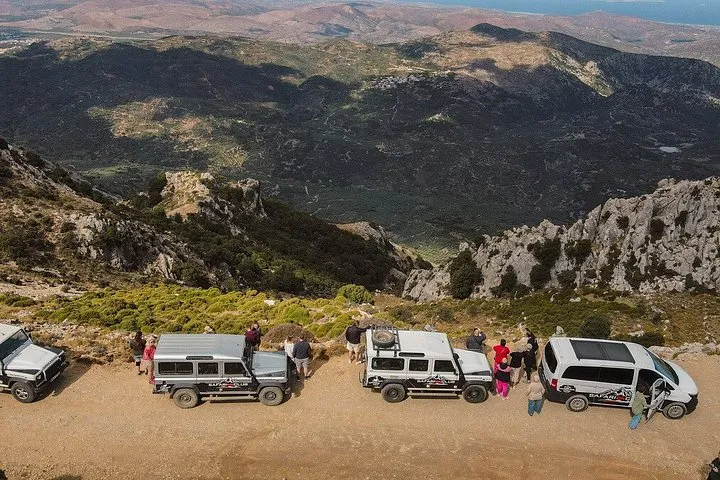 from $107.79
Safari Club: Minoan Route with Lunch
The most-reviewed safari on the island: a Land Rover day on the Minoan route through mountain villages with lunch.
Check Availability from $47.27
Olive Oil, Wine, Cheese & Honey Tasting Tour
A day of tastings from Chania: olive oil, wine, cheese and honey at the producers, the food lesson most visitors want in one run.
Check Availability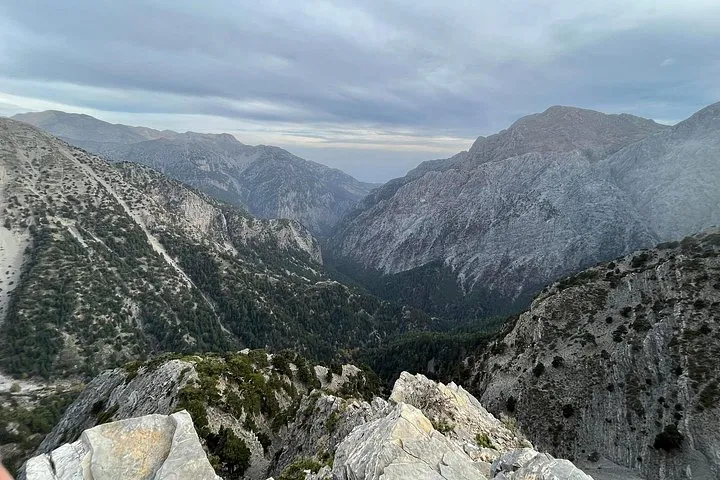 from $108.94
Explore the White Mountains of Crete
A guided day in the White Mountains, the high plateaus and shepherd huts above the Omalos side.
Check AvailabilityPrices, ratings and details are the platform's own. dollar figures are the listed prices — the platform bills in your account's currency.
Plan the Rest of the Stay
Three pages that extend the hotel decision into the rest of the trip.
Where to Stay in Crete
All seven bookable areas compared on the ground, with the Stay22 search links for each.
Island-wide Check info & availabilityCrete Costs
What a day actually costs beyond the room, from food to transport to attraction entry.
Island-wide Check info & availabilityGetting Around Crete
KTEL buses and the south-coast boats, so you can judge how connected a hotel's location really is.
Island-wide Check info & availabilityCrete Hotels Questions
What is the climate resilience fee on Crete hotels?
A per-room, per-night charge added at checkout from March to October: $1.68 (€1.50) at 1 and 2-star hotels and rooms or apartments, $3.37 (€3) at 3-star, $7.86 (€7) at 4-star and $11.23 (€10) at 5-star. It is separate from the room rate itself.
How are Crete hotels categorised?
Under the same national Greek system used island-wide: star categories 1 through 5 for hotels, plus a separate rooms and apartments tier for self-catering stays, charged the same fee as a 1 or 2-star room.
What is the best area for hotels in Crete?
It depends on the trip, not the star rating. Chania and Heraklion suit first-time sightseeing, Hersonissos suits beach-and-nightlife trips, and the south coast towns suit hiking and quiet. The full comparison is on where to stay.
Do Crete hotels publish their room rates officially?
No. No official source we could check publishes a nightly room rate for any Crete hotel, category or area. The one verified nightly figure is the climate resilience fee.
When should I book a Crete hotel?
As early as possible for July and August, when demand peaks across every base. The shoulder months, May, June, September and October, still carry the full fee and overlap closely with the Samaria Gorge's open season, 1 May to 15 October.
Are there all-inclusive resorts on Crete?
Yes, clustered mainly around the Hersonissos-Malia strip and Elounda on the east coast. No official source lists specific properties by name, so none is named on this page.
Do I need ID to check into a Crete hotel?
Yes. Greek law requires accommodation providers to record every guest's identity document at check-in, a passport or national ID card, for every traveller on the booking regardless of hotel category.
Is parking included at hotels in Chania or Rethymno's old towns?
Not reliably. Both old towns sit on narrow, often pedestrianised Venetian-era streets, and many hotels inside the walls have no on-site parking. Confirm parking directly with the property before you arrive with a rental car.
Crete Hotels on Video
TOP 10 Best HOTELS & RESORTS in CRETE, Greece (4K)
A look at the island's higher-category resort hotels.
Video: High End Travel10 Best Resorts in Crete | The Best Stays in Greek Paradise
A tour of several resort-category properties across the island.
Video: Rest & RoamWe Stayed In A CHEAP 5 Star ALL INCLUSIVE Hotel In Crete - Was It REALLY Worth It?
A traveller's honest review of a 5-star all-inclusive stay, the category this page's fee table covers.
Video: Ash and KelsWe may earn a commission if you book through one of our links, at no extra cost to you. Full affiliate disclosure