 Crete Island Guide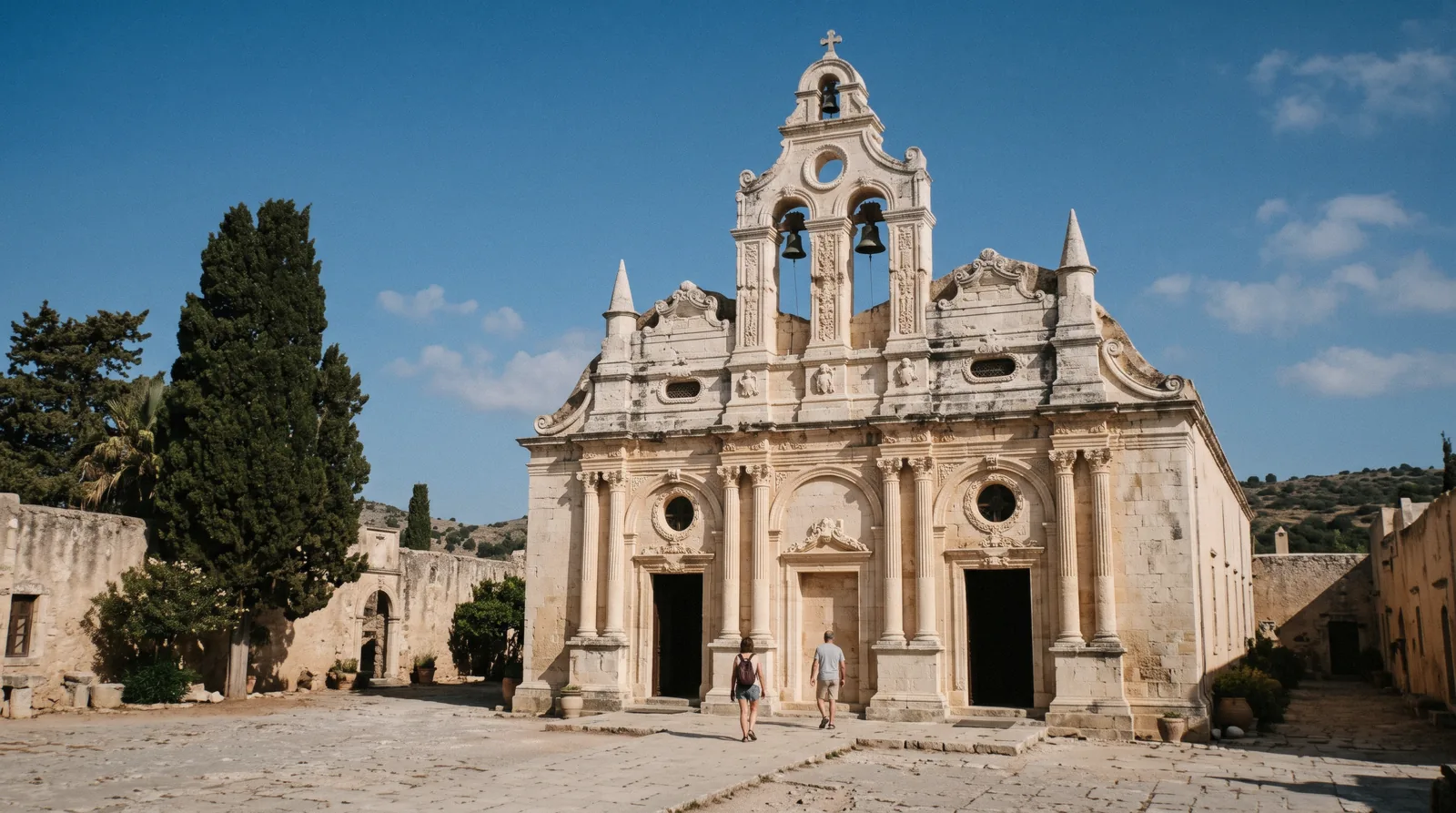
Arkadi Monastery is the fortified 16th-century monastery that became Crete's best-known symbol of resistance after an 1866 siege ended in a mass explosion rather than surrender. This guide covers the entry fee, the church's architecture, the siege itself and how to pair a visit with Rethymno, part of our Crete Island Guide.
Quick answer Arkadi Monastery in one minute
Arkadi Monastery sits on a fortified plateau about 23 to 25 km southeast of Rethymno, its current 16th-century church a mix of Renaissance and Baroque styles. Entrance costs $4.49 (€4) per participant, free under 16, confirmed through the monastery's own online booking system, though no official page states fixed opening hours. The monastery earned its place in Cretan history during the 1866 revolt against Ottoman rule, when 943 Greeks, mostly women and children, sheltered here under siege. After three days of fighting, the monastery's own gunpowder stores were deliberately detonated rather than surrendering, a sacrifice commemorated every 8 November and still marked by a memorial near the main building.
Key takeaways
- Pair it with Rethymno. A private day already combines Arkadi with Rethymno's old town, ancient Eleutherna and the pottery village of Margarites.
- Budget 1 to 1.5 hours. The site is compact: the church, the courtyard, the small museum and the memorial a short walk away.
- No published hours exist. Confirm opening times locally or through a guided tour rather than relying on any single online source.
- Based in Rethymno without Arkadi on the itinerary? A walking and gastronomy tour of the old town covers the base you would drive out from.
Key facts
Opening hours
| Not stated. No official page we reached publishes opening hours |
|---|
Closed Not stated.
Planning it
- Time needed
- Not stated. Our estimate: 1 to 1.5 hours for the church, courtyard and memorial.
- Book ahead
- Optional — walk-up usually fine
- Address
- On a fortified plateau northwest of Mount Ida, about 23 to 25 km southeast of Rethymno
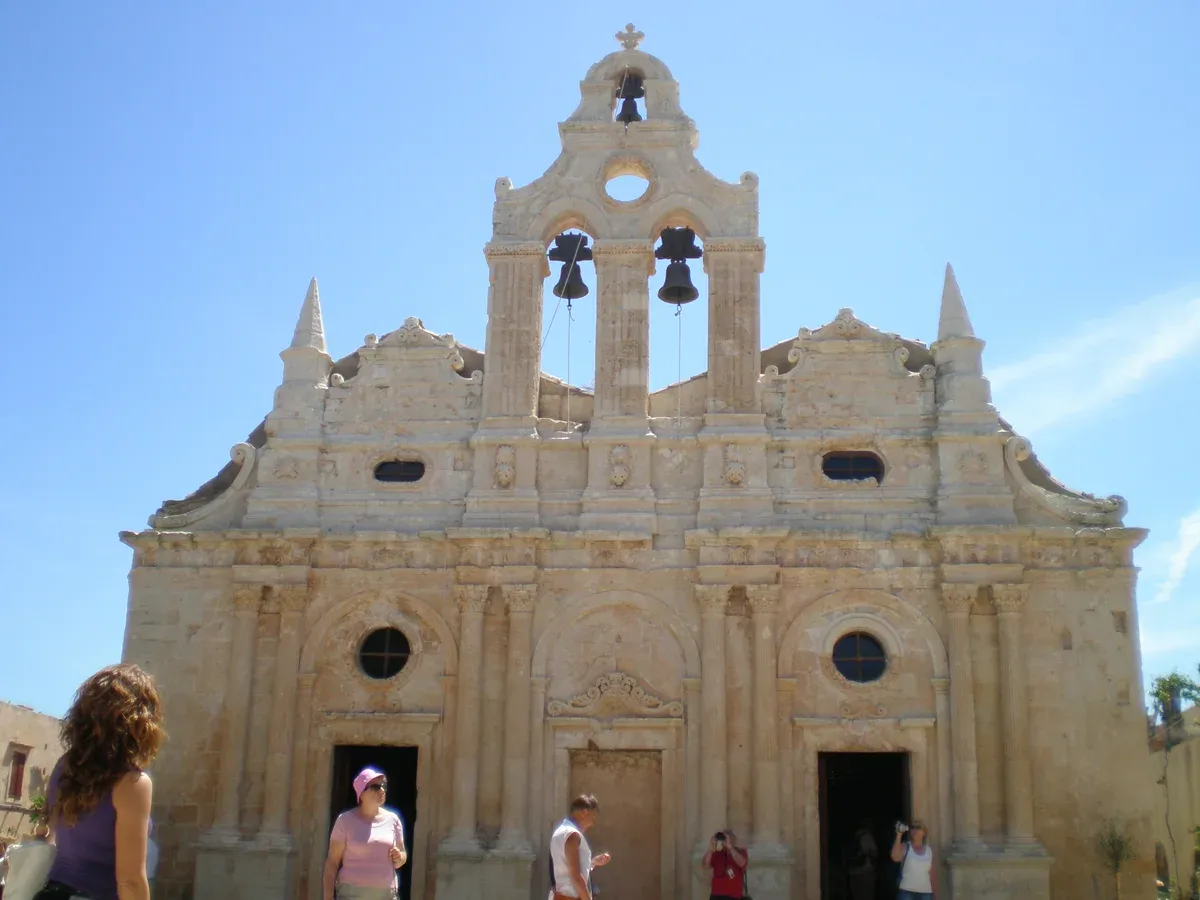
Photo: Lemur12, CC BY-SA 3.0, via Wikimedia Commons
Arkadi Monastery: The Fee and a Guided Day
The monastery sells its own entry ticket through its booking widget. The one tour card on this page is a broader private day that includes Arkadi alongside three other stops, not a resale of that entry.
Do you drive out yourself and pay the monastery's own fee, or let a private day combine it with Rethymno, Eleutherna and Margarites?
| Option | Price | Includes | Best For | Book |
|---|---|---|---|---|
| Monastery's own ticketSelf-drive visitors | $4.49 (€4), free under 16 | Entry to the church, courtyard and small museum. No transport included | Independent travelers with a rental car | Official site |
| Private day from RethymnoNo-car Rethymno-area days | $94.03 | Rethymno old town, Arkadi Monastery, ancient Eleutherna and the pottery village of Margarites in one private day | Travelers without a car who want several stops in one booking | Check Availability |
Prices are each source's own listed figure in US dollars. The monastery's own entry is $4.49 (€4), free under 16, confirmed through its booking flow. Figures current for Q4 2026.
Visiting Arkadi From Rethymno
One private day includes Arkadi directly. The other two are Rethymno town tours worth pairing with your own drive out, since Rethymno is the usual base for a visit.
 from $94.03
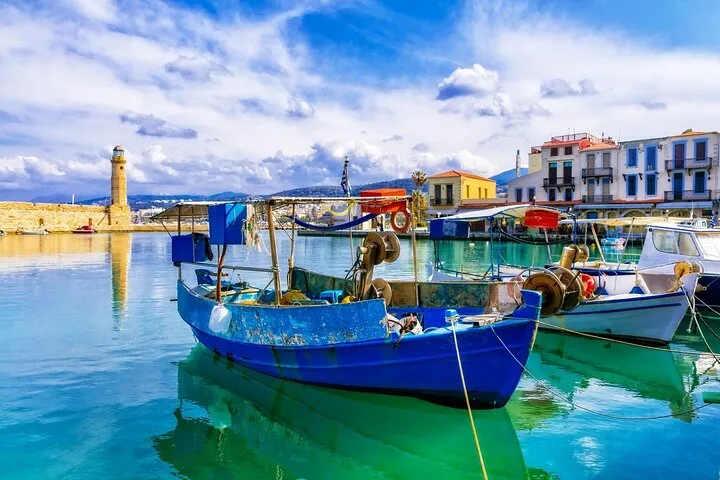
Rethymnon Old Town, Arkadi , Eleutherna, Margarites | Private
A private day from Rethymno to Arkadi Monastery, ancient Eleutherna and the potters of Margarites.
Check Availability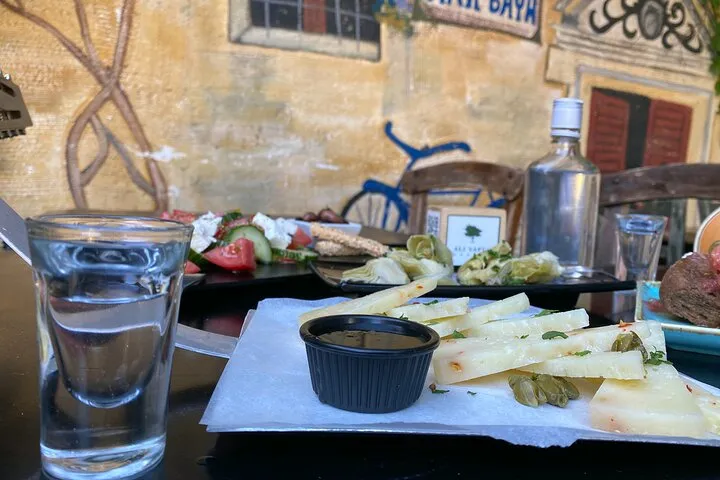 from $102.06
Rethymno Walking & Gastronomy Tour
A walking and gastronomy tour of Rethymno old town, Venetian lanes and the tastings in them.
Check Availability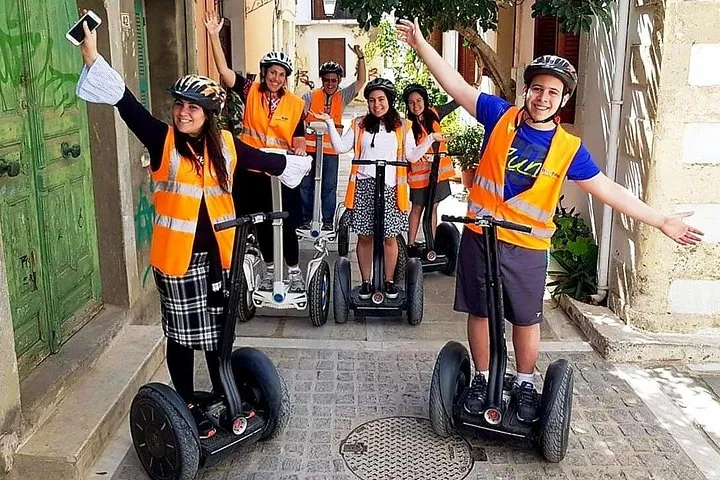 from $74.54
Rethymno Old Town Guided Segway Tour
A guided Segway loop of Rethymno old town and the Venetian harbour, the quick way to see the whole town.
Check AvailabilityPrices, ratings and details are the platform's own. dollar figures are the listed prices — the platform bills in your account's currency.
What Arkadi Monastery Is
The monastery is a fortified complex on a fertile plateau, its origins debated even by the historians who have studied it closest.
A Fortified Plateau
Arkadi Monastery sits on a rectangular plateau northwest of Mount Ida at about 500 m above sea level, surrounded by a thick, high wall that gives the interior a fortress-like character, per Wikipedia. The complex forms a near-rectangle, 78.5 m along its north wall, 73.5 m on the south, 71.8 m on the east and 67 m on the west, covering about 5,200 square metres in total. The surrounding Arkadian plateau is fertile, with vineyards, olive groves and pine, oak and cypress forest, and its western edge drops abruptly into gorges that lead east toward Rethymno.
A Founding Nobody Can Pin Down
The monastery's exact founding date is not precisely known, per Wikipedia. Tradition variously credits the Byzantine emperor Heraclius or the emperor Arcadius in the 5th century, with the second theory also explaining the monastery's name. Because Cretan monasteries are more commonly named after a founding monk, some historians instead favour a monk named Arkadios as the real source of the name.
One early traveller's account, from Joseph Pitton de Tournefort, claims the monastery was built on the site of an ancient city called Arcadia.
A Place of Learning
As early as the 16th century, the monastery was already a centre of science and art, maintaining a school and a substantial library, per Wikipedia, a role that predates the fame the siege later brought it by three centuries.
Topography, dimensions and founding history from Wikipedia's entry on Arkadi Monastery.
The Church: A Venetian Baroque Facade
The building most visitors photograph is the katholikon, the monastery's main church, dating from a 16th-century rebuilding.
Renaissance and Baroque Together
The current church dates from the 16th century, completed in what Wikipedia describes as Renaissance Revival style with a mix of Roman and Baroque elements, an unusual architectural blend for a Greek Orthodox monastery. The twin bell towers and the ornate scrolled pediment above the main entrance are the most recognisable features from outside, and the facade remains the image most associated with the monastery today.
Other Monastery Buildings
Among the surrounding buildings, the former stables were constructed in 1714 under the hegumen Neophytos Drossas, confirmed by an inscription over the door, per Wikipedia. That building measures 23.9 m by 17.2 m, divided into three sections, and traces of the 1866 battle described below are still visible on its staircase and the window jambs on its eastern wall.
Architectural details from Wikipedia's entry on Arkadi Monastery.
The 1866 Siege That Made Arkadi a National Symbol
The event that turned a working monastery into a symbol of Cretan resistance happened over three days in 1866.
943 Refugees
The monastery played an active role in Cretan resistance to Ottoman rule during the revolt of 1866, per Wikipedia. As Ottoman forces closed in, 943 Greeks, mostly women and children, sought refuge inside the monastery's fortified walls, trusting its thick perimeter wall to hold.
The Explosion
After three days of battle, and under orders from the monastery's hegumen, the Cretans inside chose to blow up barrels of gunpowder rather than surrender, sacrificing themselves in the explosion, per Wikipedia. The blast did not end the wider Cretan insurrection, but it drew international attention to the Cretan cause in a way years of fighting had not.
A National Sanctuary
The monastery became a national sanctuary in honour of the Cretan resistance, with the sacrifice commemorated every 8 November, per Wikipedia. Traces of the battle, including damage on the stables' staircase and window jambs, remain visible on site today, a physical link between the current calm courtyard and the violence that made the monastery famous.
Siege details, the refugee count and the commemoration date from Wikipedia's entry on Arkadi Monastery.
The Memorial: An Old Windmill Turned Ossuary
A short walk from the main complex, a converted windmill holds the physical remains of those who died in 1866.
From Windmill to Boneyard
About 60 m west of the monastery stands an octagonal former windmill, later used as a storage room, that commemorates the sacrifice of the Cretans who died in the siege, per Wikipedia. It served briefly as a boneyard after the battle and took its current memorial form in 1910, at the initiative of Dionyssios, then the bishop of Rethymnon.
What's Inside
The remains of those who died in the 1866 siege are kept in a glazed shelf inside the memorial, and the bones themselves clearly show battle scars, pierced by bullets and sword cuts, per Wikipedia. An inscription at the site reads, in the Wikipedia translation, "Nothing is more noble or glorious than dying for one's country."
Memorial history and the inscription translation from Wikipedia's entry on Arkadi Monastery.
The Plateau Around the Monastery
Arkadi sits inside a landscape with its own long history, stretching back well before the monastery itself existed.
A Fertile, Defensible Spot
The Arkadian plateau is fertile, carrying vineyards, olive groves and pine, oak and cypress forest around the monastery walls, per Wikipedia. The west side of the plateau falls away abruptly into gorges that run toward Stavromenos, east of Rethymno, a drop that adds to the site's naturally defensible position on its northwest corner facing Mount Ida.
Neighbours in Antiquity
The wider area developed in antiquity partly because of Mount Ida itself, a mountain legend held to be the childhood home of Zeus, which made the region attractive to early settlers, per Wikipedia. Five km to the northeast, the city of Eleftherna reached its cultural peak around the time of Homer and through classical antiquity, with its influence continuing into the early Christian and Byzantine periods, long before Arkadi existed in any form.
A Landscape of Monasteries
Arkadi was not the only significant monastery in this part of Crete. The villages surrounding it are rich in Byzantine relics testifying to the region's early wealth, and the Moni Arseniou monastery, a few km further north, was itself one of the grand Cretan monastic houses of its era, per Wikipedia. The closest village to Arkadi today is Amnatos, about 3 km to the north.
Topography and regional history from Wikipedia's entry on Arkadi Monastery.
How Much Time to Give Arkadi
No official source recommends a visit length. The table below is our own routing based on the size of the site.
Arkadi is a compact site compared with a full archaeological complex, so most visits are shorter than a half-day stop.
| Routing | On Site | Adds | Skips |
|---|---|---|---|
| Quick stop | 30 to 45 minutes | The church facade and courtyard only | The memorial and the small museum |
| Full visit | 1 to 1.5 hours | The church, courtyard, small museum and a walk to the memorial | Nothing on site |
| Rethymno day trip | Half a day | A private day adding Rethymno old town, Eleutherna and Margarites | A second destination beyond this plateau |
Getting There From Rethymno
Arkadi sits inland from Rethymno, reachable by car or as part of a wider guided day.
By Car
The monastery is about 23 to 25 km southeast of Rethymno, per Wikipedia. We found no official source confirming a public bus route or fare to the monastery directly, so most independent visitors drive.
On a Guided Day
The private day from Rethymno removes the need to drive yourself, adding ancient Eleutherna and the pottery village of Margarites to the same trip. If you would rather explore Rethymno's own old town first, a walking and gastronomy tour or a segway tour both cover the base town you would set out from.
Distance from Wikipedia's entry on Arkadi Monastery.
Five Things Most Visitors Do Not Know
Quick, sourced facts before you visit.
- Nobody actually knows when Arkadi was founded. Theories range from a 5th-century Byzantine emperor to a monk named Arkadios, and even a claim that it sits on the ruins of an ancient city called Arcadia (Wikipedia).
- The monastery already had a school and a library by the 16th century, well before the 1866 siege made it internationally famous (Wikipedia).
- 943 people sheltered inside the walls during the 1866 siege, the overwhelming majority women and children (Wikipedia).
- The memorial windmill holding the dead's remains only took its current form in 1910, more than 40 years after the siege itself (Wikipedia).
- Battle damage from 1866 is still visible today on the stables' staircase and window jambs, not hidden away in a museum case (Wikipedia).
Arkadi Monastery in Dated Lines
A short chronology from an uncertain founding to the memorial's modern form, drawn from Wikipedia's sourced account.
-
uncertain, possibly 5th century
A Disputed Founding
Tradition credits either a Byzantine emperor or a founding monk named Arkadios; the exact date is not known.
-
16th century
School, Library and a New Church
The monastery runs a school and library and completes the Renaissance-Baroque church still standing today.
-
1714
The Stables Built
Hegumen Neophytos Drossas builds the stables that would later bear the physical scars of the 1866 battle.
-
1866
The Siege and the Explosion
943 refugees shelter inside the walls; after three days of fighting, gunpowder is deliberately detonated rather than surrendering to Ottoman forces.
-
1910
The Memorial Takes Shape
The old windmill ossuary is rebuilt into its current memorial form under Bishop Dionyssios of Rethymnon.
-
every 8 November
Annual Commemoration
The 1866 sacrifice is formally commemorated each year on this date.
Source: Wikipedia's entry on Arkadi Monastery.
Dos and Don'ts at Arkadi Monastery
A small, dignified site where a few courtesies go further than at a larger attraction.
Do
- Visit the memorial windmill a short walk from the main building. It holds the actual remains from 1866, not just a plaque.
- Dress modestly. It is an active monastery as well as a historic site.
- Pair it with Rethymno for a fuller day, since the drive out is short and the town has its own old-town sights.
- Confirm opening hours locally before you set out. No official page we reached publishes a fixed schedule.
Don't
- Don't expect a large archaeological-park-scale visit. The site is compact enough that 1 to 1.5 hours covers it well.
- Don't skip the stables building. Battle scars from 1866 are still visible on its staircase and window jambs.
- Don't assume a public bus serves the monastery directly. No official route or fare was confirmed on an official page.
- Don't treat 8 November as just another date if you are visiting then. It is the monastery's annual commemoration of the 1866 sacrifice.
Arkadi Monastery and Rethymno on the Map
The monastery sits inland on its own fortified plateau, a short drive southeast of Rethymno.
- 1 Arkadi MonasteryThe fortified 16th-century monastery and site of the 1866 siege. $4.49 (€4) entry, free under 16.
- 2 RethymnoThe usual base for visiting Arkadi, with its own Venetian old town and Fortezza.
Numbers match the pins on the map.
Near Arkadi Monastery
One page to round out a Rethymno-based day.
Rethymno
The old Venetian town most visitors base themselves in before driving out to the monastery.
23 to 25 km northwest Check info & availabilityThings to Do in Crete
Every attraction on our site compared side by side, useful for building a longer Crete itinerary around Arkadi.
Island-wide Check info & availabilityArkadi Monastery Questions
Is Arkadi Monastery worth visiting?
Yes, for the combination of a genuinely striking Venetian baroque church and one of the most significant historical sites in modern Cretan history, the 1866 siege. The visit is compact, making it an easy addition to a Rethymno-based day.
What happened at the Arkadi Monastery massacre?
During the 1866 Cretan revolt against Ottoman rule, 943 Greeks, mostly women and children, sheltered inside the monastery. After three days of fighting, the monastery's own gunpowder was deliberately detonated rather than surrendering, a sacrifice commemorated every 8 November.
What is the dress code for the Arkadi Monastery?
No official dress code is published, but it remains an active Greek Orthodox monastery, so modest dress covering shoulders and knees is the standard expectation, as at most working monasteries on Crete.
Is Arkadi Monastery Catholic?
No. It is a Greek Orthodox monastery, part of the Greek Orthodox Church, despite its church building blending Renaissance and Baroque architectural styles more associated with Catholic Europe.
How much does it cost to enter Arkadi Monastery?
$4.49 (€4) per participant, free for anyone under 16, confirmed through the monastery's own online booking system.
How far is Arkadi Monastery from Rethymno?
About 23 to 25 km southeast of Rethymno. Most visitors drive themselves or join a private day that combines it with Rethymno old town, ancient Eleutherna and Margarites.
Arkadi Monastery on Video
Arkadi Monastery: The Greek Independence Symbol on Crete
A visual tour of the church, courtyard and the memorial site.
Video: JACK Nature TravelRethymno & Monastery of Arkadi, Crete
A combined look at Rethymno town and the drive out to Arkadi.
Video: Sebastian DylagArkadi Monastery, Rethymnon, Crete
A close look at the baroque facade and the monastery grounds.
Video: HOLIDAY EXPERTSWe may earn a commission if you book through one of our links, at no extra cost to you. Full affiliate disclosure