 Crete Island Guide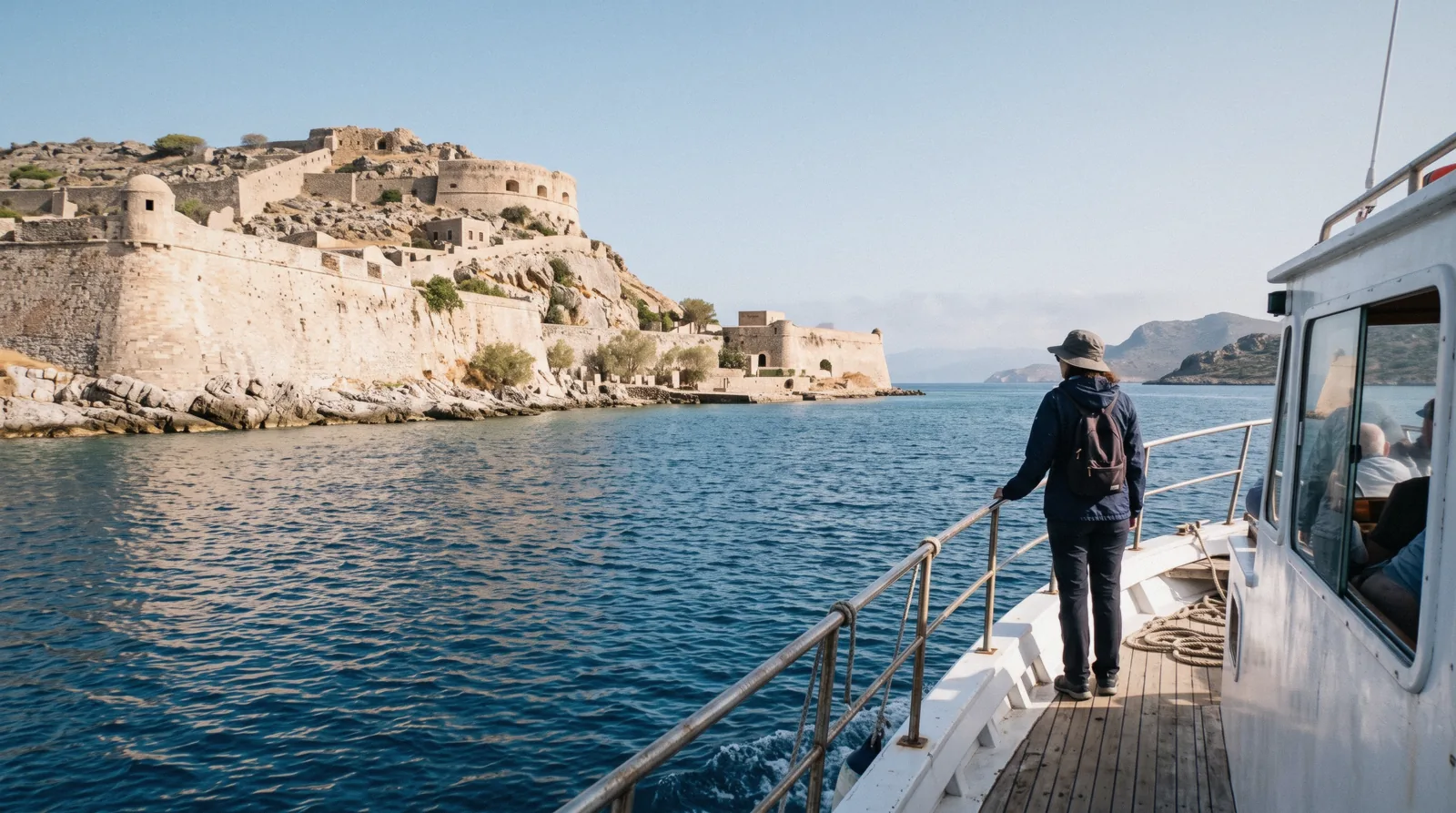
Spinalonga is the fortified islet in the Gulf of Elounda that spent half a century as Greece's last leper colony, and it is one of the few places in our Crete, Greece travel guide where the history is the main attraction rather than a backdrop. This guide covers what the Venetians and later the Ottomans built here, what actually happened to the patients who lived on the island from 1903 to 1957, what the walking circuit shows you today, and how to pick a boat, since there is no bridge and no public ferry. The €20 island entry and the boat crossing are two separate purchases, and this page is honest about which is which.
Quick answer Spinalonga in one minute
Spinalonga is a fortified islet in the Gulf of Elounda, built up by the Venetians and later used by Greece as its last leper colony from 1903 to 1957. The Ministry of Culture charges $22.50 (€20) full price and $11.23 (€10) reduced for island entry, paid on arrival, with free admission on set days including 18 April and 28 October. The island itself has no bridge, so every visit starts with a private boat from Agios Nikolaos, Elounda or the village of Plaka, each a separate ticket from the Ministry's entry fee. Summer hours run 08:00 to 20:00 daily, including Tuesdays, and the island is effectively closed to individual visitors from November to March. Plan on 1.5 to 2 hours to walk the full perimeter past the restored colony street and the Venetian bastions.
Key takeaways
- Book the boat first, the entry fee is separate. Our full comparison of the four crossings is on the Spinalonga tickets page.
- The cheapest crossing is the short shuttle from Elounda port, while the Agios Nikolaos boat with a swim stop is the most-booked option, 3,593 reviews.
- Nobody has lived on Spinalonga since 1962. What you walk through today is the restored colony the patients themselves largely built, not a ruin.
- Pair it with a catamaran day that adds a meal and swim stops if you want more time on the water than a straight crossing gives you.
Key facts
Opening hours
| Summer, 1 April – 31 October, daily including Tuesdays | 08:00–20:00 |
|---|---|
| Good Friday, Holy Saturday, Easter Monday, Whit Monday, 15 August, 28 October | 08:00–18:00 |
| Winter, 1 November – 31 March | Closed to individual visitors–groups only, by request |
Closed 1 January, 25 March, 1 May, Easter Sunday, 25-26 December. The Ministry's own page notes the visit also depends on weather and the boats' own itineraries, so a crossing can be called off on a rough-sea day regardless of the posted hours.
Admission
- Adult
- $22.50 (€20)
- Reduced
- $11.23 (€10), for the categories the Ministry lists
- Free
- 6 March, 18 April, 18 May, the last weekend of September, 28 October
Planning it
- Time needed
- Not stated by the Ministry. Our routing: 1.5 to 2 hours for the full perimeter walk, including the village street and the fortress bastions.
- Book ahead
- Recommended — a few days
- Address
- An uninhabited islet in the Gulf of Elounda, reached only by boat from Agios Nikolaos, Elounda or the village of Plaka. There is no road or bridge to the island.
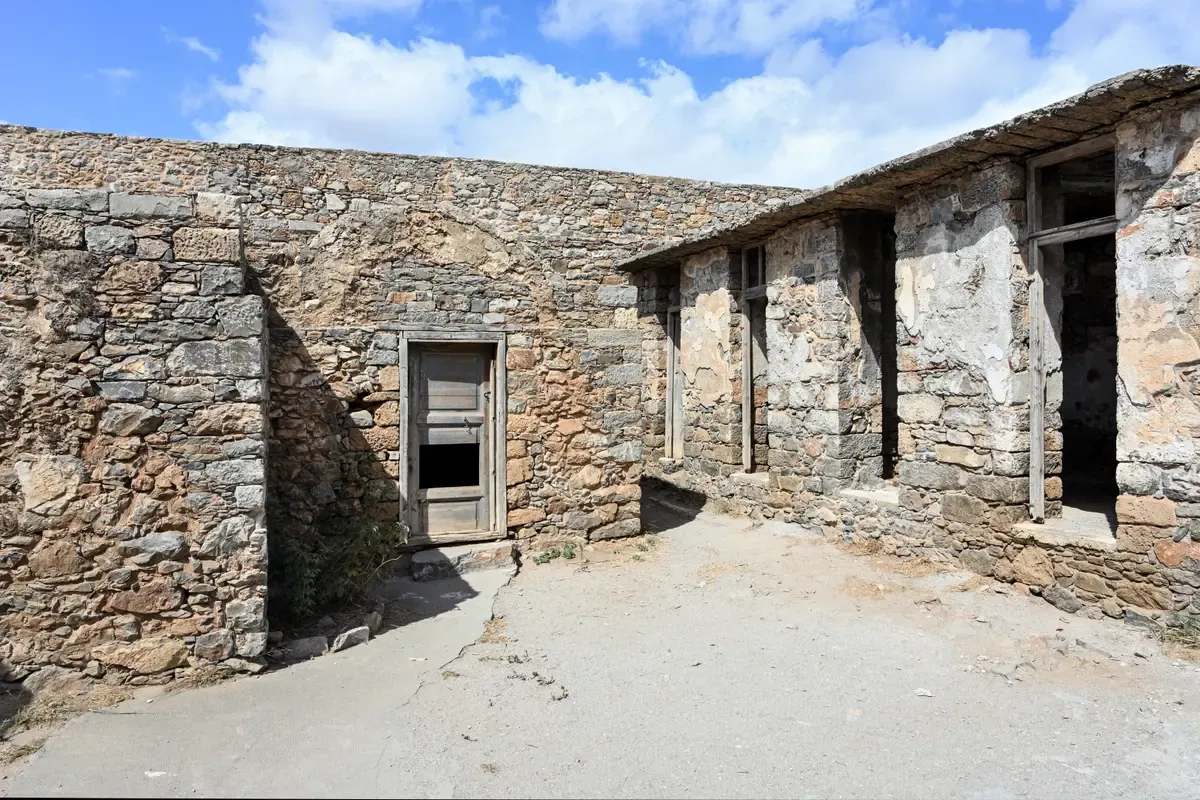
Photo: Cayambe, CC BY-SA 4.0, via Wikimedia Commons
Spinalonga Boats at a Glance
Spinalonga has one Ministry gate price for everyone, paid on the island. What differs between operators is the boat crossing itself, compared here from the two busiest departure points and in full on our dedicated Spinalonga tickets page.
Do you want the cheapest, shortest crossing, or a longer boat day with a swim stop and lunch built in?
| Option | Price | Includes | Best For | Book |
|---|---|---|---|---|
| Boat from Agios Nikolaos with a swim stopFirst-time visitors from Agios Nikolaos | $28.14 | Round-trip crossing plus a swim stop on the way back, island entry bought separately | Most travellers, the most-booked crossing | Check Availability |
| Catamaran with a gourmet mealA longer day on the water | $143.34 | A slower half-day on the Mirabello gulf with lunch and drinks, Spinalonga as one stop among several | Travellers who want a boat day, not just a crossing | Check Availability |
Prices are each platform's own listed figure in US dollars. Neither card includes the Ministry's own island entry of $22.50 (€20) full or $11.23 (€10) reduced, paid at the gate on arrival. Two more departure points, from Elounda and on a coach day from the Heraklion resorts, are compared in full on our Spinalonga tickets page. Figures current for Q4 2026.
Ways to Book a Spinalonga Boat
Four departure points cover most of the north coast. The full comparison, including what each one includes and which port it leaves from, is on our Spinalonga tickets page.
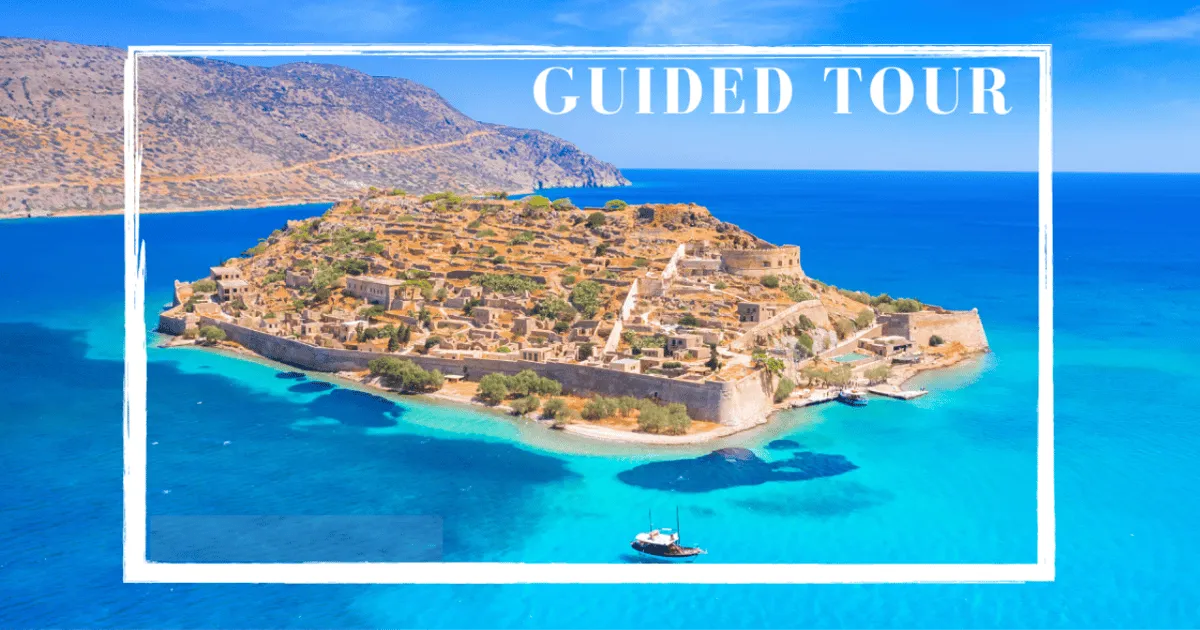 from $28.14
Agios Nikolaos: Boat Trip to Spinalonga with Swim Stop
The boat from Agios Nikolaos to Spinalonga with a swim stop; the island entry ticket is bought separately at the gate.
Check Availability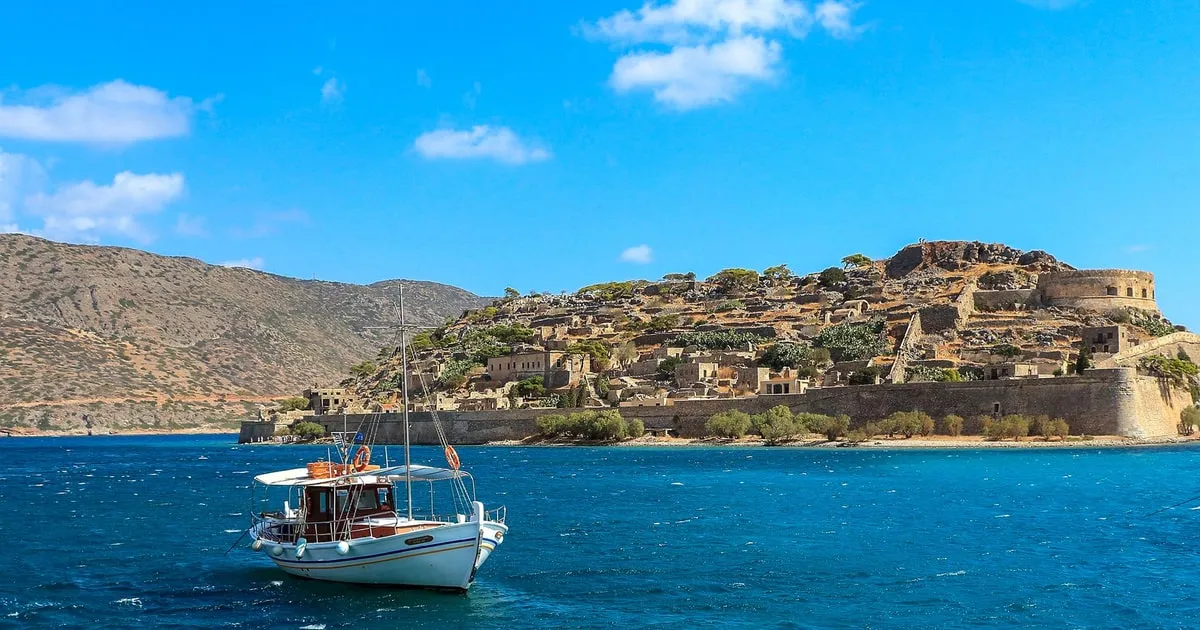 from $42.54
Day Trip to Agios Nikolaos and Spinalonga Island
A coach day from the Heraklion resorts to Agios Nikolaos and Spinalonga, the easy option for visitors staying on the north coast.
Check Availability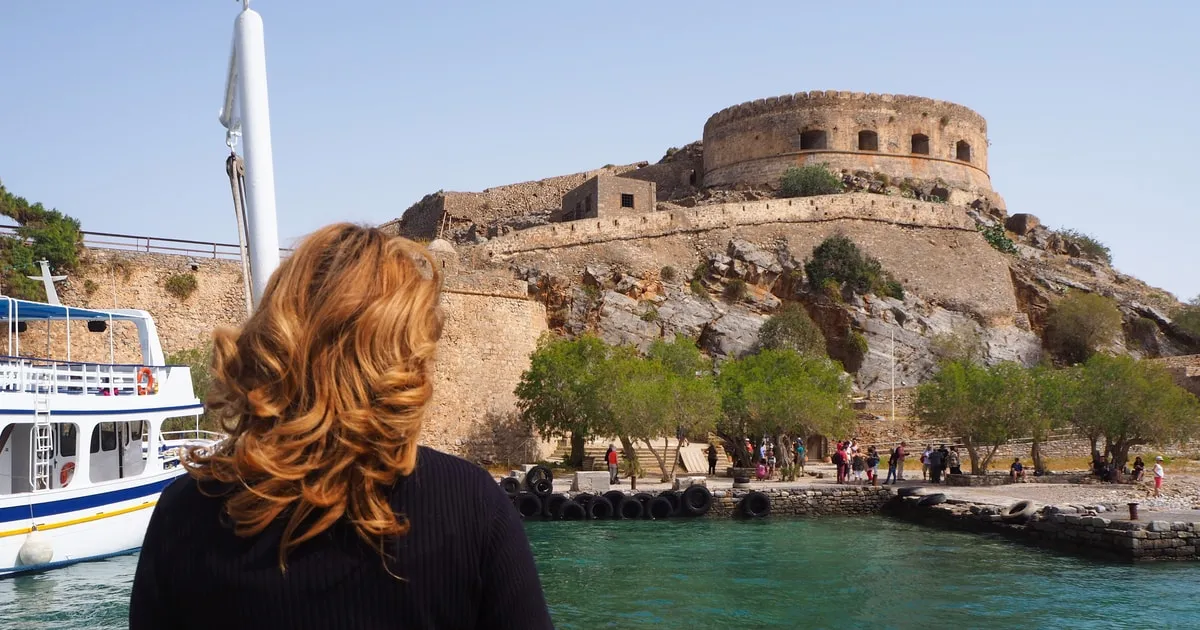 from $15.76
Spinalonga Boat Trip from Elounda Port
The short shuttle boat from Elounda port to Spinalonga and back, the cheapest crossing to the island.
Check Availability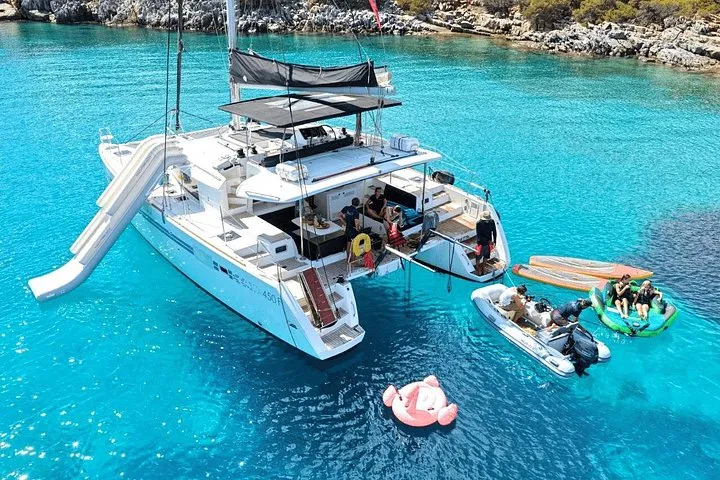 from $143.34
Ag. Nikolaos Catamaran to Spinalonga - Gourmet Meal & Water Toys
A catamaran from Agios Nikolaos to Spinalonga with a gourmet meal and water toys, the slower day on the Mirabello gulf.
Check AvailabilityPrices, ratings and details are the platform's own. dollar figures are the listed prices — the platform bills in your account's currency.
What Spinalonga Is: A Venetian Fortress
Spinalonga's walls are older than its famous use as a leper colony by more than three centuries, built by Venice to seal off one of Crete's best natural harbours.
The Venetian Fortress
Venice held Crete from 1210, and Spinalonga was among the republic's last major fortification projects on the island. Engineers surveyed the islet in 1574, the Provveditore generale di Candia Luca Michiel laid the fortress's foundation stone in 1579, and the hilltop defences were strengthened further by 1584. The result sealed the Gulf of Elounda, guarding the salt pans and the approach to Elounda and Agios Nikolaos further inland.
A church was added in 1709, though it did not survive the fighting of the last Ottoman-Venetian war.
The Ottoman Village
Venice ceded the island to the Ottomans by agreement in 1715 rather than losing it by force. Roughly 80 Muslim families lived inside the fortress walls by 1830, running Spinalonga as a fortified trading village rather than a garrison alone. Most left after the Ottoman defeat of 1898, and the last households departed by 1903, the same year Greek authorities declared the island Crete's leper colony.
History from Wikipedia's Spinalonga entry, the top-ranking page for this keyword, cross-checked against the Ministry of Culture's own Spinalonga price and access page.
The Leper Colony, 1903 to 1957
This is the fact most searches for Spinalonga are actually asking about, and the island's own Ministry page keeps it brief, so the fuller account below leans on Wikipedia's sourced history.
Mandatory Isolation
Greece declared isolation on Spinalonga mandatory in 1903, and the first group of 251 patients with leprosy (Hansen's disease) arrived in October 1904. Patients largely built and ran their own community inside the old fortress walls: shops, a cinema, a radio and a small administration, repairing the Ottoman-era houses they inherited. A disused mosque on the island was repaired and converted into a medical unit in 1928.
The Brotherhood and the Path
Patients organised their own welfare society and petitioned for improvements themselves. In 1938 they won permission to build a path around the island's perimeter, built specifically so that residents disabled by the disease could get around without crossing the steeper central ground. Two residential blocks the Brotherhood built each held 24 rooms, among the more substantial housing on the island.
The End of the Colony
Mandatory isolation rules were formally lifted in 1955 once antibiotic treatment made leprosy curable, though the colony kept operating a little longer. In 1957 the remaining patients were transferred to the Agia Varvara anti-leprosy station near Athens, and Spinalonga's medical use ended. The last resident, a priest named Chrysanthos Katsouloyiannakis who chose to stay on, left the island in 1962.
Nobody has lived on Spinalonga since.
Dates from Wikipedia's Spinalonga entry, fetched and verified in this research pass.
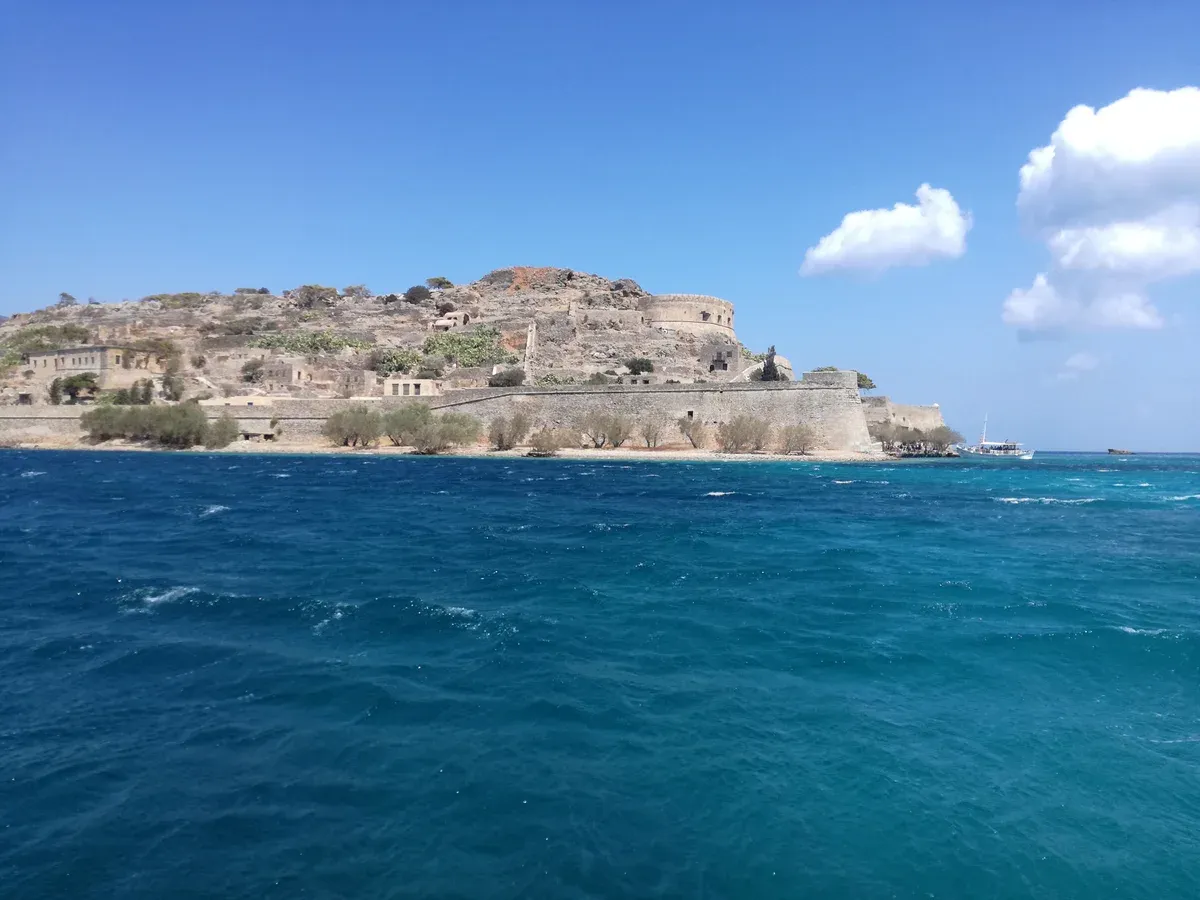
Photo: Zinovia Efthimiadi, CC BY-SA 4.0, via Wikimedia Commons
What You See Today
The island was declared an archaeological site in 1976 and formally opened to the public in 2000, with restoration work continuing since roughly 2005. What visitors walk through is largely the colony's own repaired buildings, not an untouched ruin.
The Tunnel Entrance
Boats land at a jetty leading into a vaulted stone tunnel through the fortress wall, the island's main gate. A popular nickname for this tunnel claims it reads "Dante's Gate" or carries an inscription about abandoning hope, but Wikipedia's sourced account states plainly that no historical evidence supports either the inscription or that name. The one documented nickname researcher Maurice Born recorded for a different stretch of the island was the far plainer, and bleaker, "Boulevard of Pain," on the northwestern side.
The Colony Street and Houses
Past the tunnel, a street of restored stone houses climbs toward the fortress's higher ground, repaired from the Ottoman-era buildings the patients inherited and, in places, extended with the Brotherhood's own two 24-room residential blocks. Small shops, a former cinema and the converted mosque that served as the island's medical unit from 1928 sit along the route.
The Bastions and the Cemetery
The upper circuit follows the Venetian defences, blockhouses at the island's northern and southern high points connected by a coastal fortification ring, with views back across the Gulf of Elounda to Plaka and the Lasithi mountains. A cemetery near the settlement holds the colony's dead; the bones were moved into an ossuary beside the graveyard in 2013 as part of the site's ongoing conservation.
Details from Wikipedia's Spinalonga entry.
Getting There: Agios Nikolaos, Elounda or Plaka
All three departure towns sit on the same stretch of the Gulf of Elounda, but they are not interchangeable once you have booked a specific boat.
Agios Nikolaos
The biggest town of the three and the widest choice of boats, including the swim-stop crossing and the longer catamaran day. Agios Nikolaos also has its own sights, Lake Voulismeni and the harbour, so it suits travellers who want to combine the boat with a town visit either side of it.
Elounda and Plaka
Elounda and the smaller village of Plaka sit closer to Spinalonga itself, Plaka being the shortest physical crossing of the three. The intercity bus network serves Plaka directly, with Agios Nikolaos-Plaka buses running several times a day per the regional timetable, which makes a car-free visit from Agios Nikolaos genuinely workable if you would rather not book a combined tour.
No Public Ferry
None of the three routes is a scheduled public ferry. Every boat to Spinalonga is run by a private operator, and the island itself has no dock built for anything larger than the tour boats that already serve it. Book your specific departure point in advance rather than assuming you can switch towns on the day.
Transport context from the regional KTEL Herakliou-Lasithiou timetable and the Ministry of Culture's Spinalonga access page.
How Much Time to Give Spinalonga
The Ministry does not publish a recommended visit length, and how long you spend depends mostly on whether you treat the island as a quick crossing or a half-day on the water.
The table below is our own routing, based on the boat schedules and the walking distance around the island, not an official figure.
| Routing | On the Island | Adds | Best Boat |
|---|---|---|---|
| Quick crossing | about 1 hour | The tunnel entrance, the colony street and the nearest bastion | A short Elounda or Agios Nikolaos round trip |
| Full perimeter walk | 1.5 to 2 hours | The quick circuit plus both bastions, the cemetery and the far side of the island | Any of the standard round-trip boats |
| Half-day on the water | Flexible, island time plus swimming | A swim stop, lunch and extra time on the gulf beyond the island itself | A catamaran or coach-day departure with extra stops built in |
Spinalonga in Dated Lines
A short chronology of the island, drawn from Wikipedia's sourced Spinalonga entry and cross-checked against the Ministry of Culture's own access page.
-
1579
Fortress Foundation Stone Laid
Venice's Provveditore generale di Candia, Luca Michiel, lays the foundation of the fortress after a 1574 survey.
-
1715
Ceded to the Ottomans
Venice gives up the island by agreement rather than losing it by force; by 1830 around 80 Muslim families live inside the walls.
-
1903
Last Households Leave, Colony Declared
The remaining Ottoman-era residents depart, and Greek authorities declare mandatory isolation for people with leprosy on the island the same year.
-
October 1904
First Patients Arrive
The first group of 251 patients reaches the island.
-
1938
The Perimeter Path
Patients win permission to build a path around the island, designed for residents disabled by the disease.
-
1955-1957
The Colony Closes
Mandatory isolation rules lift in 1955; the remaining patients transfer to the Agia Varvara station near Athens in 1957.
-
1962
Last Resident Departs
A priest, Chrysanthos Katsouloyiannakis, leaves the island, ending permanent habitation.
-
1976-2000
Archaeological Site, Then Public Access
Spinalonga is declared an archaeological site in 1976 and formally opened to visitors in 2000.
Sources: Wikipedia's Spinalonga entry and the Ministry of Culture's Spinalonga access page.
Dos and Don'ts on Spinalonga
Small decisions that matter more here than on a typical ruin, since there is no bridge back if you time it wrong.
Do
- Book your boat and confirm the return time before you board. There is no way off the island except the boats running that day.
- Bring water and sun protection. The perimeter walk has long open stretches with little shade.
- Wear closed, grippy shoes. The colony street and the upper bastion paths are uneven stone.
- Budget the full crossing time, not just the time on the island, when planning the rest of your day.
- Read the on-site information boards. Much of the human story is told there rather than on the Ministry's own hours page.
Don't
- Don't expect a timed-entry ticket the way some Ministry sites use. Spinalonga's gate price is a flat fee, and your boat's own schedule is what actually controls your visit window.
- Don't repeat the "Dante's Gate" inscription story as fact. No historical evidence supports it, per Wikipedia's sourced account.
- Don't plan a winter visit without checking first. The island is effectively closed to individual visitors from November to March, groups only by request.
- Don't assume every boat includes the island entry fee. Confirm on the listing. Most crossings sell the boat only, with the $22.50 (€20) entry paid separately at the gate.
- Don't skip researching the leper colony history beforehand. The island's own on-site information is useful but brief, and knowing the 1903-1957 story in advance changes what the restored street means as you walk it.
Five Things Most Visitors Do Not Know
Quick, sourced facts for the boat ride back.
- The famous "Dante's Gate" nickname for the tunnel entrance has no historical basis. No inscription or name like it is documented; the one recorded nickname for part of the island, "Boulevard of Pain," was far grimmer and applied to a different stretch (Wikipedia, citing researcher Maurice Born).
- Patients ran a functioning town inside the fortress, with their own shops, a cinema and a radio, rather than living in a bare medical camp (Wikipedia).
- A disused Ottoman-era mosque on the island was repaired and converted into the colony's medical unit in 1928, reusing Ottoman-period buildings rather than new construction (Wikipedia).
- Residents petitioned for and won permission in 1938 to build their own perimeter path, built specifically for patients whose mobility the disease had affected (Wikipedia).
- The colony's cemetery was disturbed as recently as 2013, when the remains were moved into a purpose-built ossuary beside the graveyard as part of ongoing conservation work (Wikipedia).
Spinalonga and the Gulf of Elounda
The island sits mid-channel between Plaka and Spinalonga peninsula, with Elounda and Agios Nikolaos as the two main departure towns.
- 1 SpinalongaThe fortress islet itself. $22.50 (€20) entry, paid at the gate. Allow 1.5 to 2 hours for the full perimeter walk.
- 2 EloundaThe shortest crossing, a short shuttle boat direct to the island.
- 3 Agios NikolaosThe busiest departure port, with the widest choice of boats including swim-stop and catamaran options.
- 4 PlakaThe village directly opposite Spinalonga, the shortest physical distance to the island though not every boat departs from here.
Numbers match the pins on the map.
Near Spinalonga
Three pages that round out a Gulf of Elounda day.
Spinalonga Tickets Compared
Every boat from Agios Nikolaos, Elounda and Plaka compared side by side, including which one adds a swim stop or a meal.
Same island Check info & availabilityCave of Zeus and the Lasithi Plateau
The cave where myth says Zeus was born, on a mountain plateau ringed by stone windmills, a common pairing for travellers based around Agios Nikolaos.
About an hour's drive Check info & availabilityKnossos
Crete's best-known Minoan palace, workable as a long day alongside Spinalonga if you start early from the Heraklion side.
About an hour's drive Check info & availabilitySpinalonga Questions
What happened to the lepers on Spinalonga?
Greece declared the island Crete's leper colony in 1903 and the first 251 patients arrived in October 1904. Patients built and ran their own community inside the old fortress walls until mandatory isolation rules lifted in 1955. The remaining residents were transferred to the Agia Varvara station near Athens in 1957, and the last resident, a priest who chose to stay, left in 1962.
Is Spinalonga island worth visiting?
For most visitors to eastern Crete, yes. It combines a genuine Venetian fortress with one of modern Europe's last leper-colony sites, and the restored colony street makes the history tangible rather than abstract. Budget 1.5 to 2 hours and book your boat from Agios Nikolaos or Elounda in advance.
Does anyone live on Spinalonga now?
No. The island has been uninhabited since 1962, when its last resident, a priest, departed after the leper colony closed. It operates today as a day-use archaeological site with no overnight stays.
Is there a toilet on Spinalonga?
The Ministry's own information page does not state this either way, so we are not going to guess. Most visitors treat the 1.5 to 2 hour visit as self-contained and use facilities at the departure port before boarding.
How do I get to Spinalonga?
Only by boat. Private operators run crossings from Agios Nikolaos, Elounda and the village of Plaka; there is no bridge or public ferry. Our Spinalonga tickets page compares the four main options.
How much does it cost to visit Spinalonga?
The Ministry of Culture charges $22.50 (€20) full price and $11.23 (€10) reduced for island entry, paid at the gate. That is separate from the boat fare, which runs from $15.76 for the short Elounda shuttle up to around $143 for a half-day catamaran with a meal included.
Can you walk around the whole island?
Yes. A marked perimeter path, originally built by the patients themselves in 1938 for residents whose mobility the disease had affected, circles the island past both Venetian bastions. Our own routing puts the full loop at 1.5 to 2 hours, including the colony street.
Is Spinalonga worth it if you have already seen other Crete ruins?
Yes, because the leper-colony history is unlike anything else on the island's sightseeing list. Knossos and Phaistos are Minoan ruins read mostly from stonework; Spinalonga's restored colony street and the on-site information tell a 20th-century human story most visitors know almost nothing about beforehand.
Where Spinalonga Fits in a Day
Spinalonga anchors a Gulf of Elounda day whether you base yourself in Agios Nikolaos, Elounda or further afield in Heraklion.
The simplest version is a half-day from Agios Nikolaos: the boat with a swim stop crosses in the morning, you walk the island for 1.5 to 2 hours, and you are back on dry land by early afternoon with time left for the town's own harbour and Lake Voulismeni. Travellers who want more water time take the catamaran option, which turns the crossing into a half-day on the Mirabello gulf with lunch included. For a longer day that leaves the coast entirely, the day trip that pairs Agios Nikolaos and Spinalonga together suits visitors staying further away, such as around Heraklion or the Hersonissos resorts, since the coach handles the drive out and back.
If you are already inland at the Cave of Zeus or Knossos, Spinalonga works as a second, lighter stop the following day rather than the same one, given the drive times between east and central Crete.
Spinalonga on Video
Crete: Day Trip to Spinalonga and from Heraklion
A full day trip walkthrough, including the drive from Heraklion and the boat crossing.
Video: Greece ExplainedIs Spinalonga Worth Visiting? Crete's Leper Island Tour
A first-hand look at the island walk and the leper-colony history on site.
Video: ANDREAVisiting Spinalonga Island: This Was Once a Leper Colony
A recent visitor's walk through the restored colony street and the fortress bastions.
Video: irynastravelWe may earn a commission if you book through one of our links, at no extra cost to you. Full affiliate disclosure