 Crete Island Guide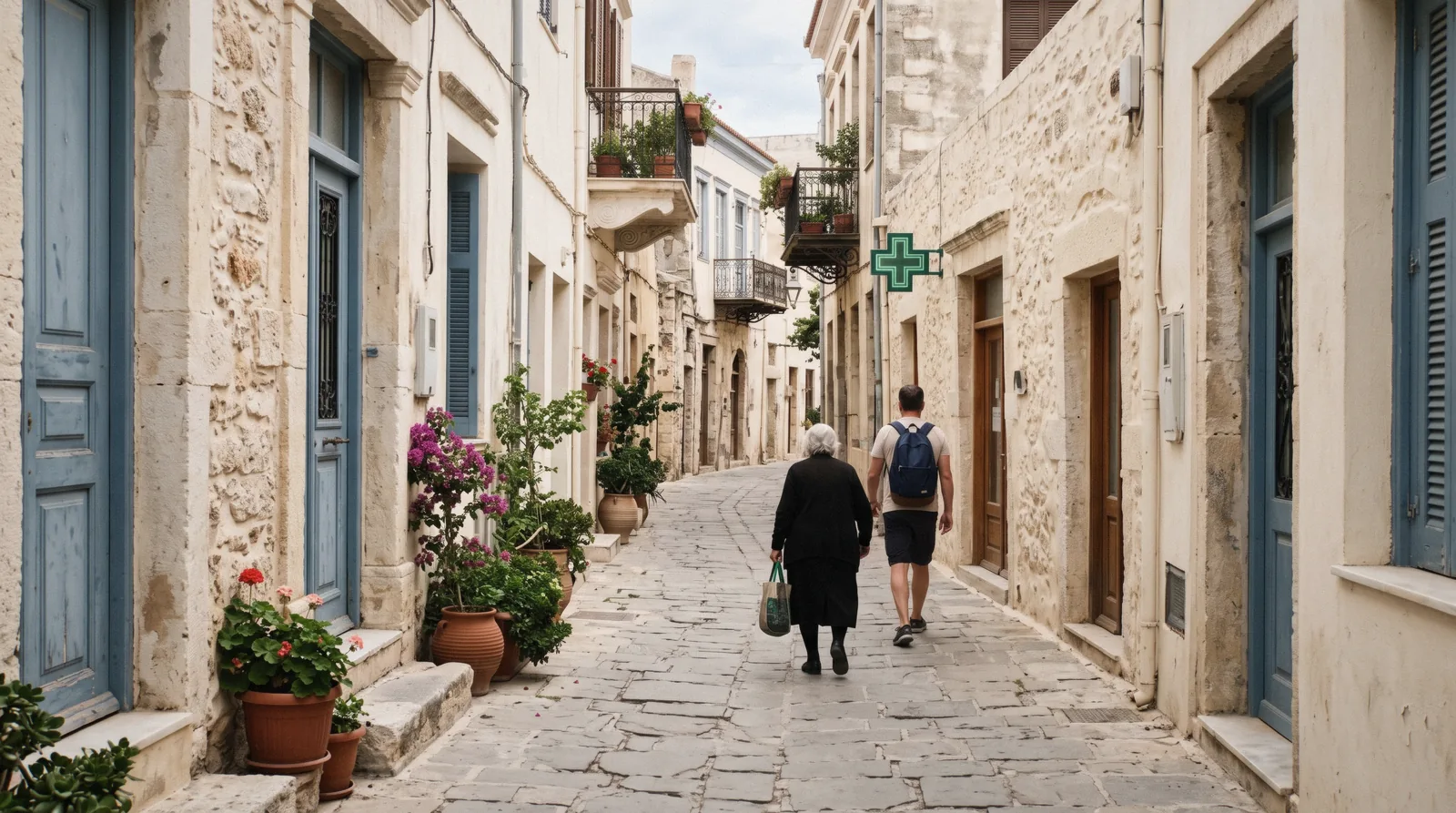
Is Crete safe is really three separate questions: what happens if someone gets hurt or sick, what the island's own outdoor hazards are, and what the ordinary tourist-town risks look like. This page answers all three with sourced numbers rather than a reassuring paragraph. Hospital addresses, the real emergency and tourist-assistance numbers, the honest gorge and sea risks, and what we checked and could not confirm, all before you book anything on the Crete, Greece travel guide. It also covers what this research could not verify, earthquakes, specific crime rates, and the exact legal drink-driving limit, honestly rather than guessing.
Quick answer Yes, by the numbers; the real risks are heat, gorges and storms
Crete is a normal, heavily visited Mediterranean island with no official crime statistics that single it out as unusually risky, and this page found none to print. The genuine, documented risks are environmental: the Samaria Gorge closes without notice on a red-code storm alert, summer heat closes Ministry sites at midday, and autumn-to-winter storms disrupt ferries. For medical needs, Greece's emergency number is 112 and the tourist assistance line is 1571, not the commonly repeated wrong number 171.
Key takeaways
- Save 112 for any emergency and 1571 for a non-emergency tourist problem in English, French or German, per the Hellenic Police's own page.
- If a trip includes Samaria Gorge, check the live status before travelling, not weeks ahead; it has closed on short notice for a red-code storm alert.
- Heat, not crime, is the island's most documented hazard in summer; see Crete weather for the midday closure pattern.
- For current geopolitical travel advisories, your own government's official page (UK FCDO, US State Department) is the authoritative source, not this one.
The numbers that actually matter
Three numbers, each with a different job, confirmed on official pages.
112 is the pan-EU emergency number and works throughout Greece, for police, fire or ambulance, with no area code needed; it is confirmed on the UK's own Foreign Travel Advice page for Greece. For a non-emergency problem as a visitor, the Hellenic Police's own page (astynomia.gr) names 1571 as the tourist assistance line, described as "telephone communication in Greek, English, French and German for solving problems faced by domestic and foreign tourists." The general Greek police emergency line is 100. A commonly repeated wrong number, 171, does not appear on the Hellenic Police's own page at all and should not be relied on.
| Number | What it is for | Languages | Source |
|---|---|---|---|
| 112 | Police, fire, ambulance, anywhere in Greece | Multilingual, pan-EU standard | UK gov.uk Foreign Travel Advice for Greece |
| 1571 | Non-emergency tourist assistance | Greek, English, French, German | astynomia.gr (Hellenic Police) |
| 100 | General police emergency (non-tourist line) | Primarily Greek | astynomia.gr (Hellenic Police) |
astynomia.gr and UK gov.uk Foreign Travel Advice for Greece.
Hospitals, with addresses
Crete's two largest full-service hospitals sit in Heraklion, with a third major hospital in Chania. Numbers and addresses are each hospital's own published contact details.
PAGNI, University Hospital of Heraklion
The region's largest teaching hospital, at Voutes, Heraklion, Crete, 71500. Switchboard 2813-402111 or 2810-392111. The hospital publishes a live daily on-call (εφημερεύει) roster on its own site for which department is on emergency duty on a given day.
Venizeleio-Pananeio General Hospital, Heraklion
A second major Heraklion hospital. Switchboard 2813 408000; morning appointments 2813 408189, afternoon appointments 2813 408469.
Chania General Hospital "Agios Georgios"
Serves the western side of the island, in the Mournies area of the Municipality of Eleftherios Venizelos, Chania. Switchboard 2821 022000 or 2821 342000; appointments 2821 071010. The hospital has 503 beds and opened on 1 September 2000 on a 54,500 m² site.
What to expect at a Greek public hospital
Greek public hospitals, including the three named above, handle genuine emergencies as a priority, and English is commonly spoken by at least some staff in a tourist region like Crete, though this is a general observation rather than an official language-service guarantee from any of the three hospitals' own pages. Bring identification, any travel insurance or EHIC/GHIC documentation, and a note of any regular medication by its generic name, since brand names vary between countries and a generic name travels better across a language gap than a brand one does.
Each hospital's own official site.
Pharmacies
Greek pharmacies are marked by a green cross sign and are present in every town centre on Crete. A duty roster rotates which pharmacy stays open outside normal hours and on Sundays in each town, the same system used across Greece, but no single official online directory listing every Crete town's current duty pharmacy was sourced for this page. The reliable way to find the duty pharmacy in a specific town on a specific day is to ask at your hotel's front desk, check the posted notice in the window of any closed pharmacy (duty pharmacies post the current roster), or call the tourist assistance line, 1571, for help.
A traveller on regular prescription medication should bring enough for the full trip plus a buffer, rather than assuming an exact match will be available locally; Greek pharmacists can often suggest an equivalent active ingredient, but this depends on the specific medication and is not something this page can guarantee in general terms.
Gorge, hiking and storm risk
The island's documented, sourced hazards are environmental rather than criminal, and the clearest example is the island's best-known hike.
Samaria Gorge
The Natural Environment and Climate Change Agency (NECCA), which manages Samaria National Park, closes both gorge entrances, Xyloskalo in the north and Agia Roumeli in the south, on any red-code severe-weather alert, with no fixed reopening date given until conditions clear. The hike itself is about 16 km one way, descending 1,227 m, with gates open 06:00-16:00 specifically so hikers are not caught on exposed rock after dark or in the day's hottest hours, and there is no vehicle exit partway through. Full fee, season and current status: Samaria Gorge.
Hikers should also know that no mobile signal is guaranteed inside the gorge itself, a reasonable inference from the terrain rather than a figure any carrier publishes, so treat the hike as a stretch where you cannot count on calling for help quickly and should stay within sight or earshot of other hikers.
Storms and ferries
Autumn and winter bring storm systems that can close the gorge, disrupt mainland ferry schedules and cancel boat excursions to Balos, Chrissi island and similar sites on short notice. This is routine seasonal weather, not an unusual event, and the practical response is a buffer day around any weather-dependent booking rather than a tight connection. Full pattern on Crete weather.
The practical response for a trip timed around either event is the same: build a spare day into the itinerary rather than scheduling a flight home for the evening of a weather-dependent activity.
Driving
Greece's exact legal blood-alcohol limit for driving was not independently confirmed on a Greek government page in our research; UK government travel advice confirms a limit stricter than the UK's own exists and that an International Driving Permit may be needed for an older paper licence, without stating the precise figure. Treat any specific limit quoted elsewhere online with the same caution this page applies to its own unconfirmed figures, and check your rental agreement and crete car rental before driving.
Sea and heat safety
The two conditions that most affect an ordinary beach or sightseeing day.
Sea
Blue Flag certification, held by beaches including those at Hersonissos, Agios Nikolaos and Elounda for 2026, independently assesses water quality and facilities, but no official lifeguard-staffing roster for specific Crete beaches was sourced for this page, so this page does not claim any particular beach is lifeguarded. Standard Mediterranean caution applies: check for a flag system in use at your specific beach and treat an unflagged, unstaffed cove, however scenic, as a swim-at-your-own-judgement spot.
Heat
Heraklion and Chania both average above 28°C from June through August with almost no rain, and the Ministry's own sites, Knossos among them, have closed at midday on confirmed heat-alert days. Carry more water than feels necessary on any outdoor site visit in summer and book the first entry slot of the day where possible. Full month-by-month figures: Crete weather.
Jellyfish and marine life
No official marine-hazard advisory specific to Crete's beaches was sourced for this page, so no specific jellyfish-season warning or sting-treatment protocol is printed here beyond standard general advice: rinse a sting with seawater, not fresh water, and seek medical attention for a severe reaction. Ask locally at your specific beach, since conditions vary by location and by year in ways no single page can track reliably.
Ordinary tourist-town risks, and the current-events question
What this page can and cannot responsibly say about crime and current geopolitical safety.
Petty crime
No official Crete-specific crime statistics were found on a government source reachable for this page, and none is printed here as a result. The practical, non-statistical advice that applies to any busy tourist destination still applies: keep bags zipped and in sight in crowded markets and bus stations, use a hotel safe for passports when not needed, and treat an unsolicited "free" offer or an overly insistent vendor with the same skepticism you would anywhere else in Europe. Car break-ins at remote trailhead and beach parking areas, a pattern reported anecdotally rather than confirmed by an official statistic, are worth a mention specifically because several of this site's recommended stops, the Samaria Gorge trailhead and some of the quieter beaches, involve leaving a car unattended for hours at a time; do not leave visible valuables in the car at any of them.
Current events and travel advisories
Searches about whether Crete or Greece is affected by a named regional conflict or war are common, and this page does not track daily geopolitical developments or print a current-events verdict, since that information changes faster than a travel guide can responsibly maintain it. The authoritative, continuously updated source is your own government's official travel advisory, the UK's Foreign, Commonwealth & Development Office or the US State Department among them, and that page should be checked close to departure rather than relying on a travel guide's general reassurance.
Road Conditions, Honestly
Crete's mountain and coastal roads vary widely in width and surface quality, from the well-maintained national road along the north coast to narrow, unguarded switchback roads up to the Lasithi Plateau or along parts of the south coast. No official road-safety statistics specific to Crete were sourced for this page, so this page does not quote an accident rate. What is worth planning around practically: rental cars here are commonly smaller than a typical US or UK vehicle for a reason, many village and old-town streets were never built for wider cars, and a driver unfamiliar with a manual transmission or with driving on the right should confirm their rental's specifications before arrival rather than discovering a mismatch at the counter. Crete car rental has the fuller detail on rental terms.
Solo And Female Travellers
No official source tracks or rates Crete specifically for solo or female traveller safety, so this page makes no ranked claim on that question, a gap also noted for the island's general crime statistics. What can be said honestly: Crete runs on the same tourist-town infrastructure as the rest of coastal Greece, well-lit main streets in the towns covered on this site, hotels used to independent travellers of every kind, and the same 112 and 1571 numbers covering everyone equally. The ordinary precautions that apply to solo travel anywhere in southern Europe, sharing an itinerary with someone at home, keeping a charged phone, avoiding an isolated beach or trail alone after dark, apply here with no Crete-specific modification this page can point to.
Travel Insurance And EU Health Coverage
Greece is an EU member state, and EU citizens with a valid European Health Insurance Card, or UK citizens with a Global Health Insurance Card, can access state-provided healthcare in Greece under the EU's reciprocal-care rules, the standard arrangement across EU member states rather than a Crete-specific policy. This page did not independently verify the current exact coverage terms or any patient contribution required at a Crete public hospital in this research session, so travellers should check their own card issuer's current guidance before relying on it. For non-EU visitors, and for anyone wanting coverage beyond what reciprocal arrangements provide, standalone travel insurance is the standard recommendation, the same as for any international trip; no official source compares specific insurance products, so this page does not recommend one.
Earthquakes And Natural Hazards
Crete sits in a seismically active part of the eastern Mediterranean, and periodic earthquakes are a well-documented feature of the region internationally, not a specific statistic this page attempts to quote. This page did not source a current official seismic-risk rating or a specific recent-event figure for Crete in this research session, so none is printed here. The standard, globally applicable earthquake guidance, drop, cover and hold on if you feel strong shaking, move away from glass and heavy furniture, and follow any instruction from hotel staff or local authorities, applies on Crete the same as anywhere else in an active seismic zone, and is worth knowing before travel rather than looking up during an event.
Wildfire risk, a documented general hazard across Mediterranean Greece in the dry summer months, is a similar case: no Crete-specific official fire-risk page was sourced this session, so this page notes the general regional pattern, dry, hot, often windy summers, without quoting a specific current fire-danger rating.
Tap Water
No official municipal water-quality page for Heraklion, Chania or the other towns on this site was checked and verified in this research session, so this page does not state whether tap water is safe to drink in each one individually. The general, widely reported pattern across mainland Greece and its larger islands is that tap water in major towns is treated and considered safe, though taste can vary and many residents and visitors prefer bottled water for taste reasons rather than a safety concern. A traveller with a sensitive stomach or specific concerns should buy bottled water as a simple precaution, widely and cheaply available everywhere on the island.
Guided ways to see a town without guesswork
A local guide answers the small practical safety questions, which street, which hour, where to eat, as a side effect of the tour itself. Prices are the listing's own from-prices in US dollars.
 from $108.94
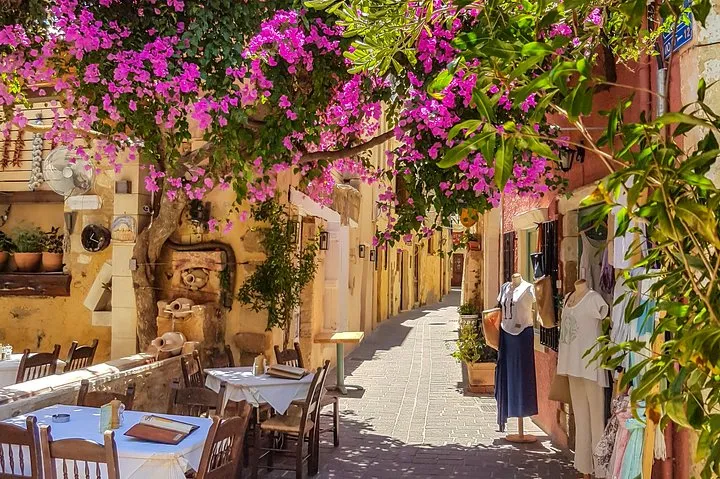
Explore Chania's Old Town through the eyes of a local
A local-led walk through the lanes of Chania old town behind the Venetian harbour.
Check Availability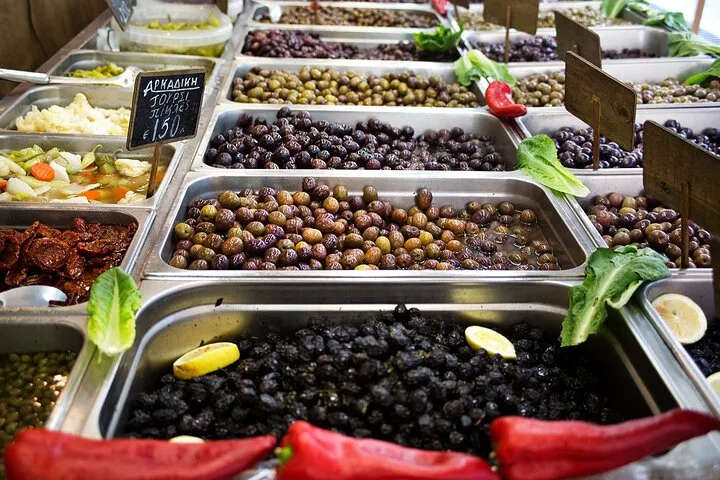 from $111.23
Heraklion Food Stories Walking Tour with 8 local-favorite stops
A food walk through Heraklion with eight stops for the dishes people in the city actually eat.
Check Availability from $103.21
Walking “Food tasting tour” in the town of Chania
A walking food-tasting tour through Chania old town, the bakeries, cheese shops and tavernas between the harbour and the market.
Check Availability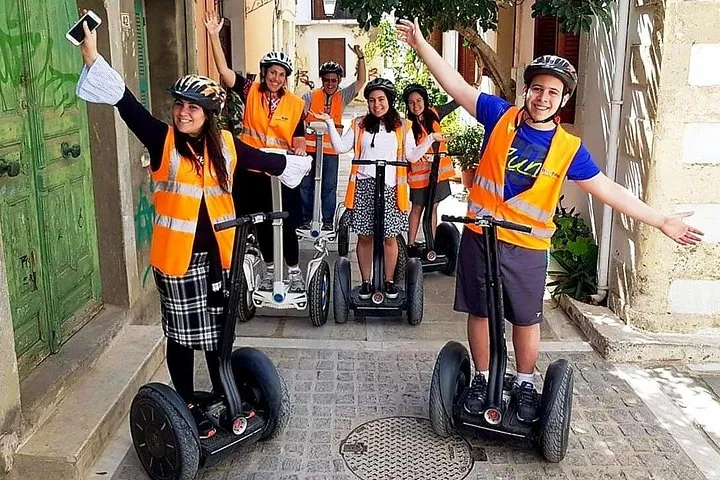 from $74.54
Rethymno Old Town Guided Segway Tour
A guided Segway loop of Rethymno old town and the Venetian harbour, the quick way to see the whole town.
Check AvailabilityPrices, ratings and details are the platform's own. dollar figures are the listed prices — the platform bills in your account's currency.
Related practical pages
Three pages that extend this one.
Crete weather
The full month-by-month pattern behind the heat and storm risks on this page.
Heat and storms Check info & availabilityCrete car rental
What to check in a rental agreement before driving Crete's mountain roads.
Driving Check info & availabilitySamaria Gorge
Current gate status, season and the fee, before you commit to a hiking day.
Live status Check info & availabilityIs Crete safe: questions
Is Crete safe for tourists?
By the sources this page could reach, yes: no official crime statistics single Crete out as unusually dangerous, and the documented, sourced risks are environmental, heat, storms and the Samaria Gorge's demanding terrain, rather than criminal. See the gorge and storm risk section.
Is Crete friendly to Americans and other visitors?
This page found no official source rating visitor friendliness by nationality, so it does not make that claim either way. What is sourced is practical: Crete's tourist infrastructure, hospitals and the 1571 tourist assistance line all serve English-speaking visitors as standard.
What is the emergency number in Crete?
112, the pan-EU emergency number, works throughout Greece for police, fire and ambulance with no area code. For a non-emergency tourist problem, call 1571, not the commonly repeated wrong number 171. See the numbers table.
Where is the nearest hospital in Crete?
Depends on where you are. Heraklion has two major hospitals, PAGNI and Venizeleio-Pananeio; Chania has its own, Chania General Hospital "Agios Georgios" in the Mournies area. Full addresses and phone numbers are in the hospitals section.
Is it safe to hike Samaria Gorge?
Yes, within its rules: go only inside the gorge's open hours (06:00-16:00), check the live status before travelling since it closes on red-code storm alerts, and treat the 16 km one-way, 1,227 m descent as a serious hike with no shortcut back. Detail on Samaria Gorge.
Is Greece affected by current regional conflicts?
This page does not track daily geopolitical developments. For current, authoritative travel-security advice, check your own government's official travel advisory, the UK FCDO or the US State Department among them, close to your departure date rather than relying on a general travel guide.
Is Crete safe for solo female travellers?
No official source rates this specifically, so this page makes no ranked claim. Crete runs on the same tourist infrastructure as the rest of coastal Greece, and the ordinary precautions that apply to solo travel anywhere in southern Europe apply here with no Crete-specific modification this page could source. See solo and female travellers.
Are Crete's mountain roads dangerous to drive?
No official accident statistics specific to Crete were sourced for this page. What is practically true: many roads, especially up to the Lasithi Plateau or along the south coast, are narrow and unguarded, and rental cars here tend to be smaller for that reason. See road conditions, honestly.
Does travel insurance cover me in Crete?
EU EHIC and UK GHIC holders can access Greek state healthcare under the EU's reciprocal-care rules; this page did not independently verify the exact current coverage terms, so check your card issuer's own guidance. Standalone travel insurance is the standard recommendation for everyone else. See travel insurance and EU health coverage.
Are there earthquakes in Crete?
Crete sits in a seismically active part of the eastern Mediterranean, a well-documented general fact internationally. This page did not source a current official risk rating or a specific recent-event figure, so standard earthquake safety guidance, drop, cover, hold on, is the practical takeaway rather than a quoted statistic. See earthquakes and natural hazards.
Is it safe to leave valuables in a rental car in Crete?
No official theft statistic exists for this page to cite, but remote trailhead and beach parking areas, including the Samaria Gorge trailhead, are reasonable places to apply ordinary caution and avoid leaving visible valuables, the same practice that applies at any similar remote parking area in Europe.
Crete Safety, on Video
Three practical takes: common tourist mistakes, a scam-awareness video relevant across Greece, and a direct answer to the safety question.
Is Greece Safe Right Now? (Real Situation Explained)
A direct, current take on the safety question this page answers with sourced numbers.
Video: Greece ExplainedTourist Scams in Greece
Covers the common petty-scam patterns this page advises ordinary caution against.
Video: Wolters WorldThe Crime Rate in Crete, How Safe is Crete?
An independent take on the same question this page could not resolve with an official statistic.
Video: Rose In MadeiraVideos load from YouTube only when you press play.
We may earn a commission if you book through one of our links, at no extra cost to you. Full affiliate disclosure